Skip to content
A dog gently mouthing a soft plush toy in a calm home setting.
I usually work with plush toys for kids, but more and more buyers ask me about pet plush—and one question comes up often: “Why does my dog nurse (suckle) on stuffed animals?”
In most homes, this looks like slow sucking, kneading with paws, drooling, and holding one favorite plush for a long time.
In many cases, this behavior is a self-soothing habit. It can be linked to comfort, stress relief, early-life experiences, or simple routine. It becomes a concern when it turns obsessive, causes injury, or creates a safety risk from swallowing plush parts. 德州A&M獸醫與生醫科學院+3American Kennel Club+3Whole Dog Journal+3
Why do some dogs display nursing behavior toward stuffed animals?
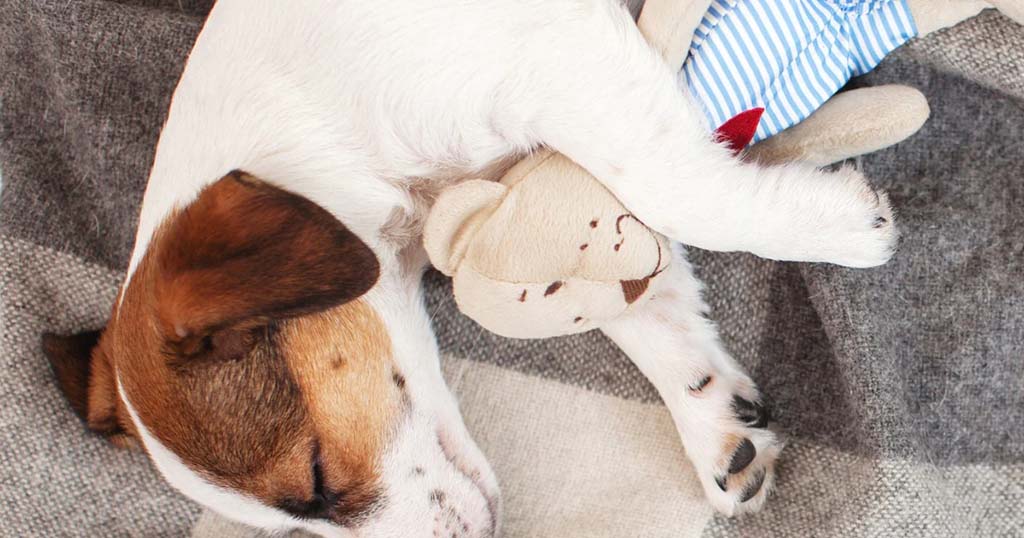
Many dogs “nurse” plush toys for the same reason children hold a blanket: it feels safe. Veterinary and behavior sources often describe blanket/toy sucking as a comfort-seeking behavior that can appear during rest time, after meals, or during quiet moments. American Kennel Club+1
From what I see in product feedback and owner stories, the behavior usually starts because the plush gives the dog three things at once:
- a soft texture that feels similar to early comfort
- a predictable routine (the same toy, the same spot, the same time)
- a calming sensation that helps the dog settle
Some dogs also “knead” while sucking. This can look like a puppy behavior that stayed into adulthood. AKC notes that normal, occasional sucking is not necessarily canine compulsive behavior, especially if the dog can be interrupted and still does other activities. American Kennel Club
Here is a simple way I explain the common drivers to buyers and pet brands:
| Common Driver | What It Looks Like | Most Typical Timing | Why It Happens | What Owners Can Do |
|---|---|---|---|---|
| Comfort habit | Slow sucking + kneading | After meals, bedtime | Self-soothing routine American Kennel Club | Allow if safe, limit duration if needed |
| Mild stress relief | Grabs plush during change | Visitors, noise, new place | Calming coping skill Whole Dog Journal | Add calm routine, reduce triggers |
| Attention pattern | Suckles when owner reacts | When owner is busy | Learned response | Don’t reinforce; redirect calmly |
| Boredom outlet | Long sessions with toy | Alone time | Needs enrichment Whole Dog Journal | More walks, training, puzzle toys |
| Medical/compulsive risk | Hard to stop, causes sores | Any time, escalating | Can become compulsive Oregon Humane Society | Vet check + behavior plan |
Most owners feel worried when they see drool and kneading. But the core question is not “Is it strange?” The better question is: Is it safe, and can my dog stop?
Is nursing on plush toys linked to early weaning or separation anxiety?
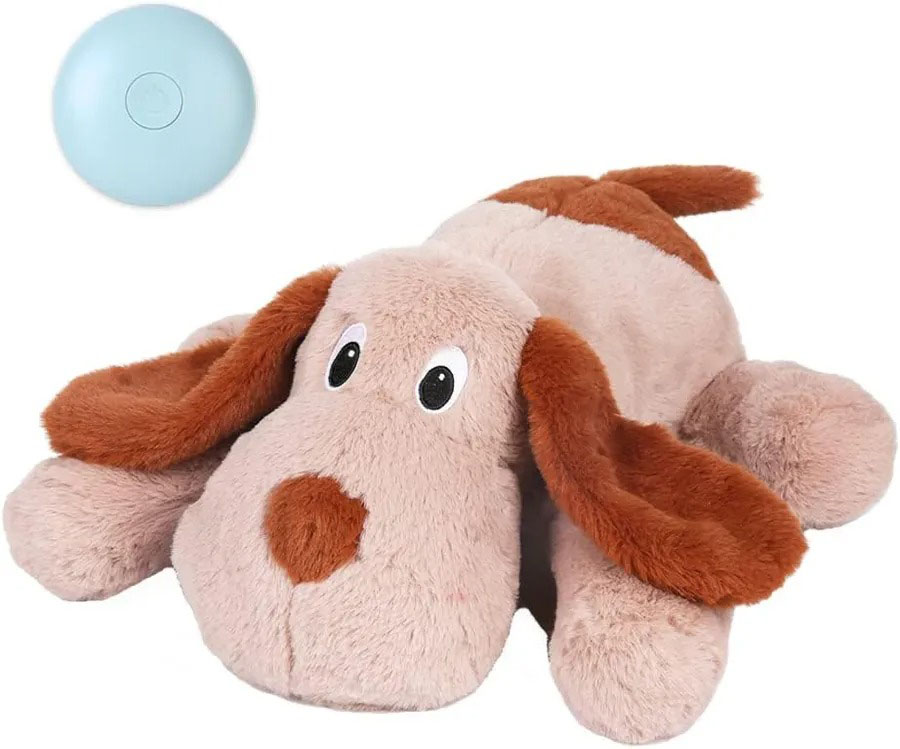
Sometimes, yes—but it is not the only cause.
Many behavior explanations connect sucking to early comfort needs. Some dogs may carry puppy-like soothing behaviors into adulthood, especially if they were weaned early or had early-life stress. Sources discussing blanket sucking often include early weaning as one possible factor, but they also stress that many dogs do it simply because it is calming. American Kennel Club+1
Separation anxiety is a different topic. The ASPCA explains separation anxiety as distress triggered by being away from a bonded person. In homes where nursing behavior happens mainly when the owner leaves (or when departure cues happen), separation anxiety could be part of the picture. ASPCA
A simple way to separate these two ideas:
- Early comfort habit: the dog nurses even when you are home and relaxed
- Separation-linked habit: the dog nurses mainly around departures, alone time, or reunion stress
Use this quick comparison:
| Topic | What Usually Triggers It | What You Might See | Key Sign | Best Next Step |
|---|---|---|---|---|
| Early comfort / weaning-related habit | Rest time, after eating | Gentle suckling, calm body | Stops easily when redirected American Kennel Club | Keep safe toy; add routine |
| Separation anxiety link | Owner leaves, cues like keys | Pacing, whining, destruction | Many stress signs together ASPCA | Behavior plan; talk to vet/trainer |
| Mixed causes | Both rest + alone time | Comfort sucking plus stress | Pattern changes with environment | Track triggers for 1–2 weeks |
If a dog only nurses a plush at night while everyone is home, I usually treat it as comfort. If the dog starts nursing intensely only when left alone and also shows panic behaviors, I treat it as a stress case and suggest professional help.
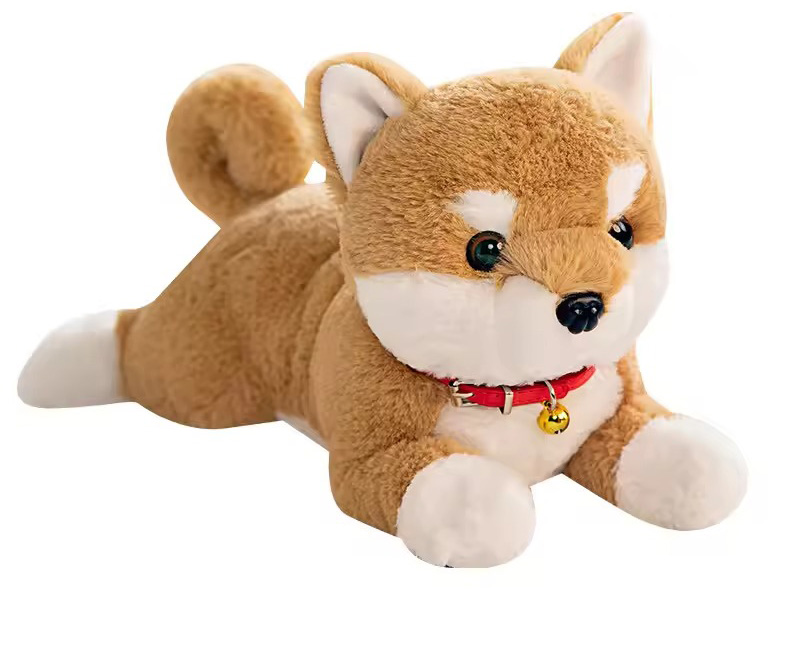
How do stress, comfort-seeking, and instinct influence this behavior?
This is where the behavior makes the most sense.
Many dogs use repetitive, gentle actions to calm themselves. Whole Dog Journal describes blanket sucking as comfort-seeking and often connected to stress relief. Whole Dog Journal AKC also frames occasional sucking as normal when it is not all-consuming and can be interrupted. American Kennel Club
I like to explain it in a practical way: nursing on a plush can be a “pause button.” It lowers arousal. It can help a dog settle after excitement, noise, or even a busy day.
Common stress triggers that can increase nursing behavior include:
- moving homes
- new baby or new pet
- schedule changes
- loud sounds (construction, fireworks)
- reduced exercise
- long hours alone
Here is a useful “trigger and response” map:
| Trigger Type | Example | Why It Raises Nursing | What Helps Most |
|---|---|---|---|
| Environmental change | Travel, new apartment | Dog looks for familiar comfort Whole Dog Journal | Keep the same plush + routine |
| Emotional stress | Conflict, loud guests | Self-soothing reduces stress | Create quiet space |
| Under-stimulation | Not enough play/walk | Dog creates its own calming habit | Add enrichment + training |
| Over-stimulation | Too much excitement | Dog uses sucking to come down | Short calm breaks |
| Routine cue | After dinner every day | Habit becomes predictable | Fine if safe; set limits if needed |
If the behavior stays gentle and safe, it can be a healthy coping tool. The goal is not always to “stop it.” The goal is to prevent it from turning into a risk.
Are certain dog breeds or life stages more prone to nursing plush toys?
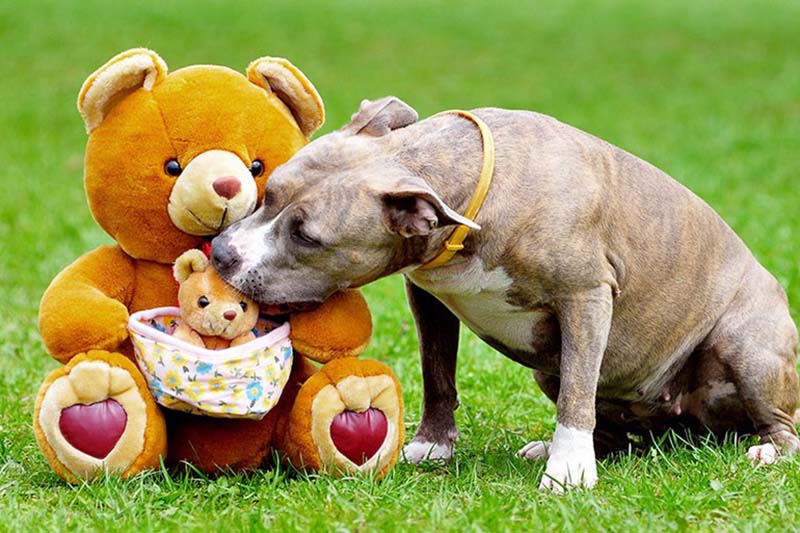
Some owners notice patterns by breed or age, but the strongest pattern is usually personality and early experience, not breed alone. Still, many reports suggest the behavior appears more often in:
- dogs that are naturally soft-mouthed
- dogs that enjoy carrying toys
- dogs with strong comfort routines
- dogs that experienced early stress or major change
Life stage matters a lot:
- Puppies may do it as a normal soothing action.
- Adolescents may do it during stress periods or training changes.
- Adult dogs may do it as a stable habit.
- Senior dogs may increase it if they feel anxious, uncomfortable, or confused (for example, when routines change).
This table helps pet brands and owners think clearly without stereotypes:
| Life Stage | How Nursing Behavior Often Shows Up | What It Usually Means | What to Watch |
|---|---|---|---|
| Puppy | Frequent sucking, kneading | Self-soothing, still developing | Swallowing fibers, chewing seams |
| Teen dog | On/off behavior | Stress + routine building | Escalation during alone time |
| Adult | One “favorite toy” habit | Comfort ritual American Kennel Club | Over-attachment, refusal to stop |
| Senior | Increased frequency | Comfort + possible anxiety | New behavior may need vet check Oregon Humane Society |
If the behavior is new in an older dog, I treat it differently. New repetitive behaviors can sometimes relate to discomfort or anxiety, so a vet check is a smart step before assuming it is “just cute.” Oregon Humane Society
When does nursing behavior indicate a behavioral or health concern?
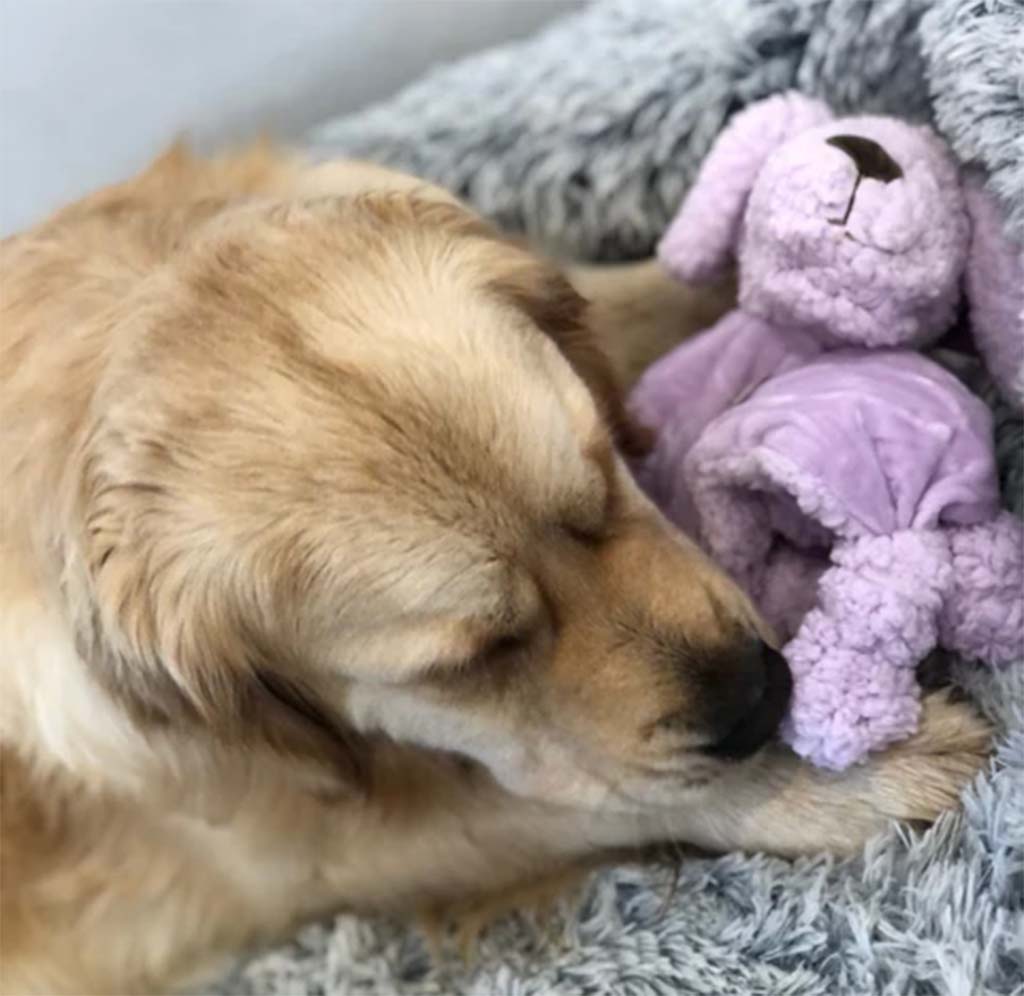
This is the most important section for owners, because the risk is not the sucking itself—it is what can follow.
AKC notes that occasional sucking is generally not considered compulsive when it is not all-consuming and can be interrupted. American Kennel Club The concern starts when the behavior becomes hard to stop, replaces normal activities, or leads to harm.
Also, plush toys can create physical risk if a dog tears fabric, swallows stuffing, or swallows squeakers. Veterinary guidance on toy hazards warns that swallowed parts can cause gastrointestinal blockage, and squeakers are a known risk if ingested. 德州A&M獸醫與生醫科學院+1
I suggest owners watch for these red flags:
- your dog suckles for long periods and cannot be redirected
- the dog skips food, play, or interaction to keep suckling
- the dog becomes distressed if the toy is removed
- the dog damages the plush and eats stuffing or fabric
- you see sore spots, hair loss, or skin irritation
- vomiting, diarrhea, loss of appetite, or lethargy (possible ingestion issue)
Oregon Humane Society’s behavior guidance for obsessive-compulsive behavior emphasizes starting with a vet visit to rule out medical causes before treating it as purely behavioral. Oregon Humane Society
Use this safety decision table:
| What You See | Risk Level | Why It Matters | What I Recommend |
|---|---|---|---|
| Gentle sucking, stops easily | Low | Often normal comfort American Kennel Club | Allow with supervision |
| Long sessions but still interruptible | Medium | Habit may be stress-linked Whole Dog Journal | Add exercise + enrichment |
| Can’t stop, does it for hours | High | May be compulsive pattern Oregon Humane Society | Vet + behavior professional |
| Chews holes, eats stuffing/squeaker | High | Choking/obstruction risk 德州A&M獸醫與生醫科學院+1 | Remove toy; vet if symptoms |
| GI symptoms after toy damage | Urgent | Possible blockage | Seek veterinary care promptly |
I’m not a veterinarian, so I don’t diagnose. But as a manufacturer, I focus on risk prevention: if the dog can ingest it, the design must change—or the toy must be removed.
How can pet-safe plush toy design reduce risks while supporting comfort?
This is where pet plush design can genuinely help owners. Many dogs nurse plush because it feels comforting. We don’t want to remove comfort—we want to reduce hazards.
From a manufacturing point of view, pet-safe plush design focuses on:
- stronger seams and stitch density
- safer internal structure (so stuffing does not leak easily)
- no hard plastic eyes (use embroidery)
- no small detachable parts
- safer squeaker placement (or no squeaker for “nursing” toys)
- durable outer fabrics that resist tearing
- clear sizing guidance by dog size and chew strength
Texas A&M’s veterinary guidance on toy hazards highlights risks like swallowed squeakers and GI obstructions. 德州A&M獸醫與生醫科學院 That is why I treat squeakers carefully in pet plush design—especially for dogs that mouth and suck rather than “play and drop.”
Here is a practical design checklist for pet brands:
| Design Element | Safer Direction | Risk It Reduces | Comfort Benefit |
|---|---|---|---|
| Eyes/face | Full embroidery | Small-part choking | Soft feel for mouthing |
| Seams | Reinforced + double stitching | Stuffing leakage | Toy lasts longer |
| Filling | Contained inner pouch (when possible) | Ingestion of loose fiber | Keeps shape for nursing |
| Squeaker | Optional or fully protected | Swallowing hazard 德州A&M獸醫與生醫科學院 | Calmer “comfort toy” option |
| Fabric | Strong, low-fray plush | Tearing and fiber swallowing | Pleasant texture |
| Size | Match dog jaw size | Choking and tearing | Better cuddle fit |
If you are a pet brand buyer, the biggest “U-shaped” benefit is this: a better-designed comfort plush reduces emergency risk, reduces refunds, and increases repeat purchases—because owners trust the toy in daily routines.
At Kinwin, we can support pet-safe plush development with controlled stitching, material selection, and customizable branding (logo label, hang tag, packaging). If you want a comfort-style pet plush that is designed to be safer for mouthing behavior, you can contact me at [email protected] or visit kinwintoys.com.
Conclusion
Most dogs nurse plush toys for comfort, but safety depends on supervision and durable design. At Kinwin, I help brands develop safer comfort plush with strong stitching and low-ingestion-risk construction. Contact me at [email protected] or visit kinwintoys.com to discuss your pet plush project.