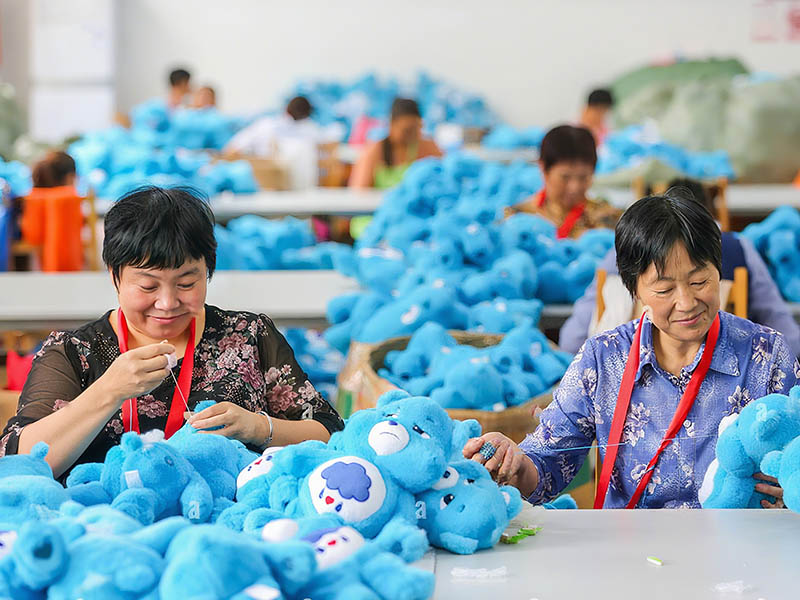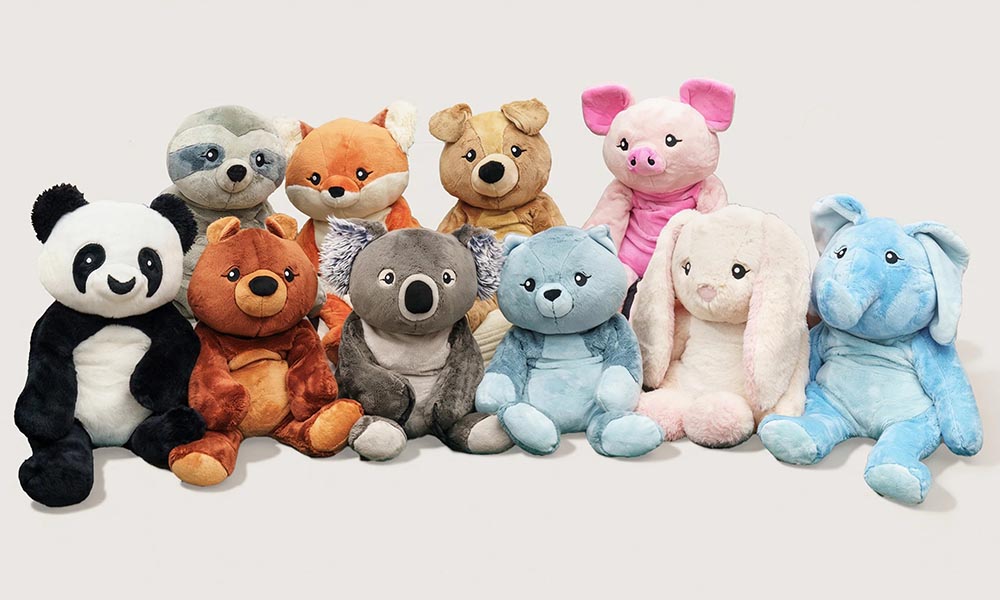
Warmies feel different from regular stuffed animals because they are designed to be heated in a microwave and used like a soft, warm comfort tool—not only as a cuddle toy. I’m Amanda from Kinwin, and in this guide I’ll break down what Warmies are filled with, how the heating and scent work, what outer material features matter for microwave use, and how heated plush compares with conventional stuffing.
In short, Warmies stuffed animals are commonly described by the brand as weighted plush containing natural flaxseed for warmth and weight, and real dried French lavender for scent. Warmies also clarify that they use dried lavender (not lavender oil), and provide care guidance such as microwave-only heating and surface cleaning. Warmies USA+4Warmies USA+4Warmies USA+4
What core filling materials are used inside Warmies stuffed animals?
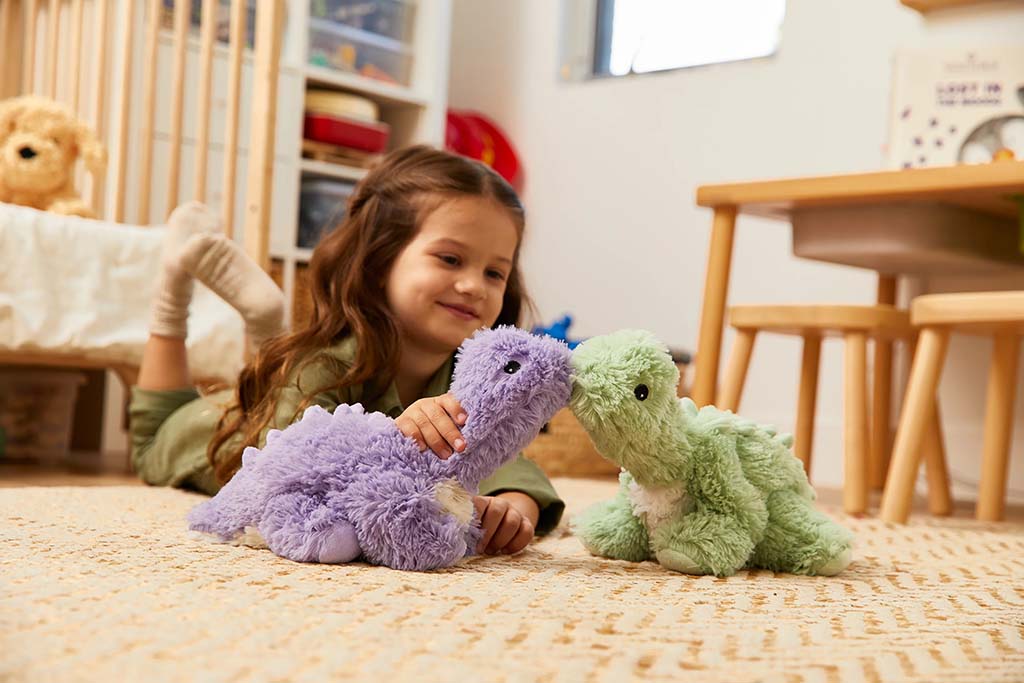
Warmies’ “core identity” comes from two internal materials: a grain filling for heat + weight, and dried French lavender for scent. On their official FAQ pages, Warmies state their products contain flaxseed and real dried French lavender. Warmies USA+2Warmies USA+2
From a product engineering point of view, that means Warmies are not using the standard “100% polyfill” construction you see in most stuffed animals. Instead, the fill is designed to do three jobs at the same time:
- Heat retention (warmth after microwaving)
- Weight (a steady, calming “deep-pressure” feeling)
- Aroma release (lavender scent during warm use) Warmies USA+1
This also explains why Warmies emphasize different care rules than normal plush, such as surface clean only for many items and specific heating instructions. Warmies USA+1
| Fill element | What Warmies says it is | Main function in the product | What it changes vs normal plush | What buyers should understand |
|---|---|---|---|---|
| Natural flaxseed | Used inside Warmies Warmies USA+1 | Heat + weight | Heatable and weighted feel | Requires correct heating + storage habits |
| Dried French lavender | “Real dried French lavender” Warmies USA+2Warmies USA+2 | Scent during use | Built-in aroma (no spray needed) | Scent strength may fade gradually with time |
| “Weighted filling” concept | Warmies describes “weighted” plushies Warmies USA+1 | Sensory comfort | Heavier than typical plush | Weight consistency becomes a QC requirement |
| Grain-based warming design | Warmies markets as microwavable plush Warmies USA+1 | Thermal comfort | Different risk profile than polyfill | Needs clear consumer instructions |
How do flaxseed and grain fillings function for heat retention?
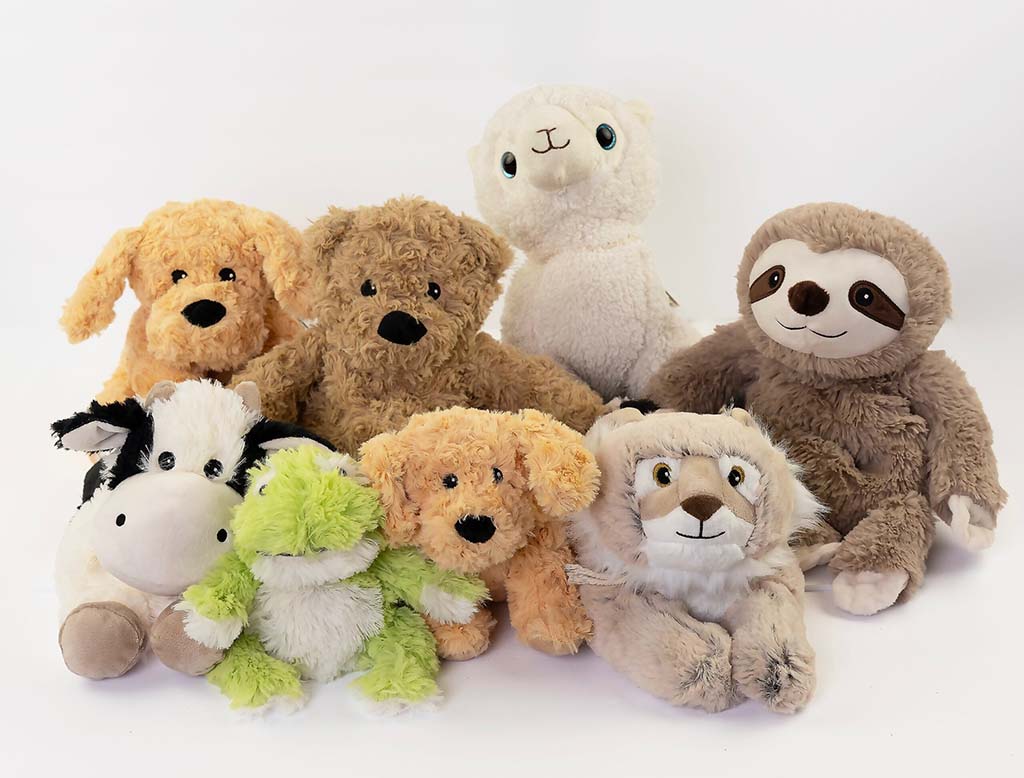
Warmies are intended to be warmed by microwave heating, and the internal grain fill is what holds and releases warmth gradually. Warmies describes their plush as microwavable and highlights flaxseed as the natural filling that delivers warmth. Warmies USA+2Warmies USA+2
From a practical “how it works” perspective, grain fills retain heat because they have mass and many small particles, so warmth distributes through the fill and then releases slowly. In use, that creates a longer “warm hug” effect than a normal plush toy, which usually cools down quickly because it has mostly air-filled fiberfill.
Warmies also emphasize key heating behaviors that matter for safety and performance:
- Follow the label instructions (time varies by microwave wattage). Warmies USA+1
- Heat only in a microwave (not an oven). Warmies USA+1
- Heat from room temperature and allow cooling between reheats. Warmies USA+1
| Topic | Why grain fill matters | What users experience | What can go wrong | Practical best practice |
|---|---|---|---|---|
| Heat holding | Grain has thermal mass | Warmth lasts longer than fiberfill | Overheating can damage product | Follow label time and watt guidance Warmies USA+1 |
| Even heating | Small particles distribute warmth | Comfortable “full-body” warmth | Hot spots if overheated | Use recommended time and check temperature Warmies USA+1 |
| Moisture behavior | Natural filling may release slight moisture | Mild surface dampness can occur | Heating while wet increases risk | Keep product clean/dry before heating Warmies USA+1 |
| Weight effect | Grain adds weight | “Calming” pressure | Too heavy for some young kids | Choose size/weight appropriate to user Warmies USA |
Are essential oils added, and how is scent safety controlled?
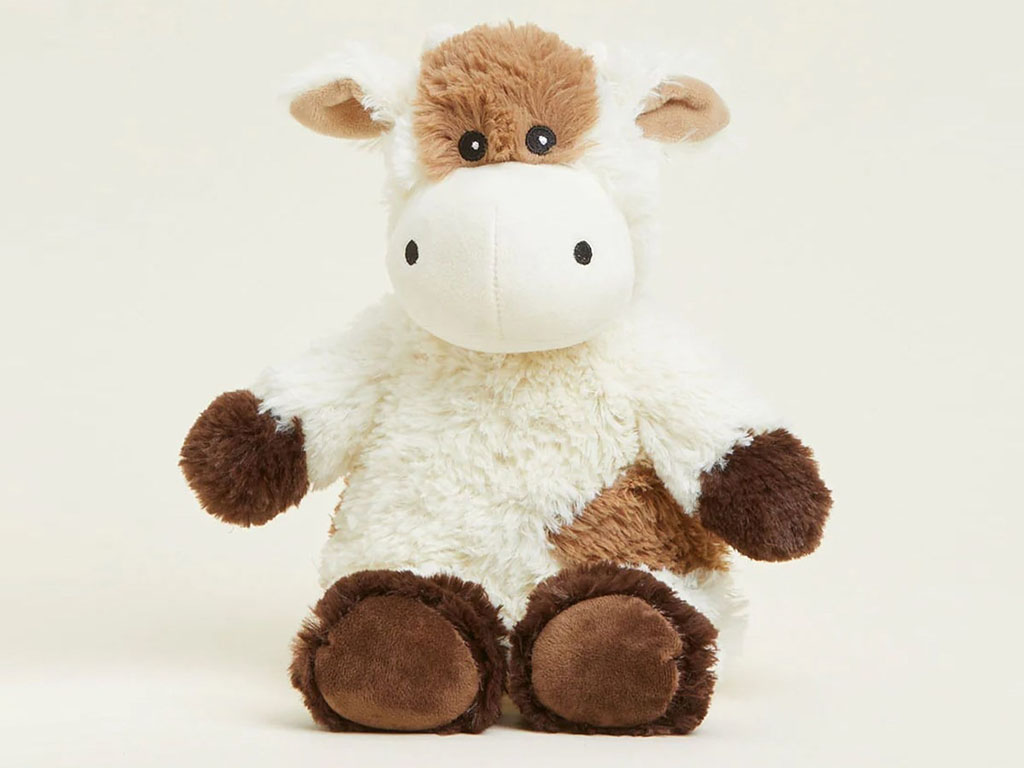
Warmies directly addresses this question: they say they use dried lavender, not lavender oil, and describe the products as gently scented with real dried French lavender sourced from Provence, France. Warmies USA+1
For buyers, this matters because “oil-infused” products raise extra concerns (oil migration, skin sensitivity, staining, and stronger odor). Warmies’ positioning suggests their scent approach is based on botanical dried lavender inside the plush, rather than adding essential oils. Warmies USA
From a manufacturer’s viewpoint, “scent safety control” is mostly about:
- Ingredient choice (dried botanical vs oil)
- Scent stability (consistent aroma strength lot-to-lot)
- Contamination control (keeping scent material dry and clean)
- Clear guidance (what to do if the product gets wet; how to store)
Warmies also note that some product formats (such as certain pet products) may differ in scent approach and have special instructions (for example, removable heat packs). Warmies USA
| Scent question | What Warmies says | Why it matters | What brands should copy as a best practice | Consumer-friendly wording idea |
|---|---|---|---|---|
| Oil vs dried | “Dried lavender, not lavender oil” Warmies USA | Reduces oil-related concerns | Declare scent source clearly | “Scented with dried lavender” |
| Scent source | “Dried French lavender” Warmies USA+1 | Ingredient transparency | Source + batch control | “Made with real dried lavender” |
| Scent intensity | “Gently scented” Warmies USA | Sets expectation | Define “gentle” positioning | “Light lavender aroma” |
| Wet conditions | Wet heat packs should be replaced (for some products) Warmies USA | Moisture increases risk | Add “do not heat if wet” rules | “Do not heat while damp” |
What fabric and outer material standards support microwave heating?
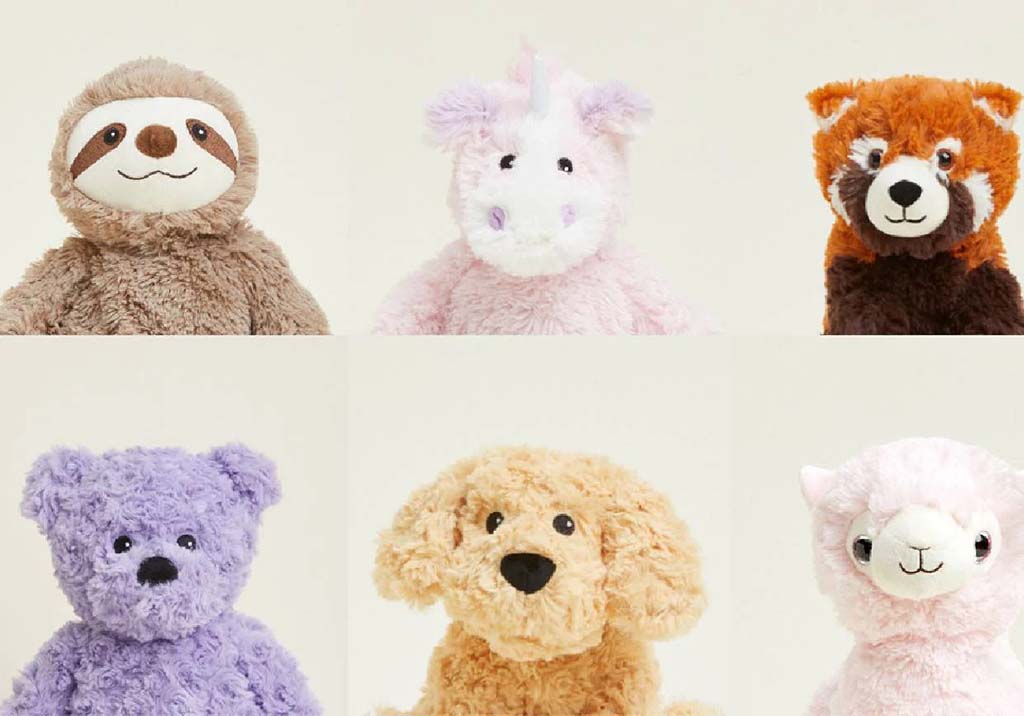
Heated plush is a special product type. The outer fabric is still “plush,” but it must support the use case: microwave heating, frequent handling, and safe temperature contact.
Warmies describes their stuffed animals as fully microwavable and indicates they are designed with heat-safe materials. Warmies USA+1 They also emphasize important usage rules such as heating only in a microwave and following label directions. Warmies USA+1
From a technical perspective, the outer material system should support:
- Heat tolerance (no melting, no strong odor release)
- Stable dyes/prints (no bleeding from warmth + minor moisture)
- Comfort on skin (no rough seams, no sharp trims)
- No metal parts (microwave incompatibility)
Warmies’ own care messaging is also a clue about material behavior: they commonly recommend surface cleaning rather than full washing for many Warmies stuffed animals, which aligns with protecting the internal natural grain fill. Warmies USA+1
| Outer material factor | Why it matters for microwavable plush | What “good” looks like | What increases risk | Safe design direction |
|---|---|---|---|---|
| Fabric heat behavior | Prevent melt/odor | Stable surface after heating | Low-grade synthetics | Heat-tolerant plush fabric system |
| Trim selection | Avoid microwave issues | Soft embroidery, no metal | Metal clips, foil, hard add-ons | Embroidery-first decoration |
| Dye stability | Heat + minor moisture stress | No color transfer | Poor dye control | Colorfast dye and testing plan |
| Seam comfort | Warm contact with skin | Smooth seams, no scratch points | Thick seam lumps | Clean seam finishing and QC |
| Care method fit | Grain fill limits washing | Clear “surface clean” plan | Full soak and slow dry | Clear care label and warnings Warmies USA+1 |
How do safety testing and compliance apply to heated plush products?
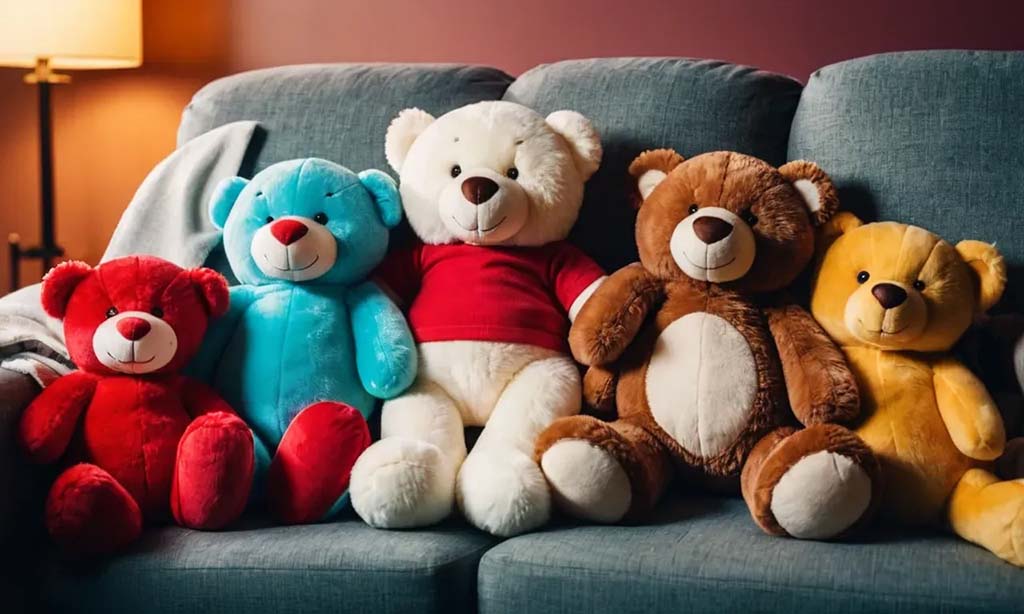
Heated plush products have a wider safety scope than conventional stuffed animals because they introduce temperature, microwave instructions, and natural grain fill behavior. Warmies’ care guidance highlights key safety behaviors (microwave only, follow label, don’t heat from damp conditions, remove heat packs for certain oversized or special formats). Warmies USA+2Warmies USA+2
For brands and B2B buyers, I recommend thinking in two layers:
- Toy safety layer (if marketed for children): seams, small parts, labeling, chemical safety for fabrics/dyes.
- Heated product layer: heating instructions, overheating warnings, moisture handling, safe temperature guidance.
Even if a product is sold “for comfort” (not only as a toy), many retailers and platforms will still expect clear and conservative labeling.
Warmies also notes that heating instructions are provided on product labels and that overheating should be avoided. Warmies USA+1
| Compliance area | What’s different for heated plush | What to document | What to test (practically) | What reduces buyer risk |
|---|---|---|---|---|
| Heating instructions | User behavior affects safety Warmies USA | Wattage/time guidance, warnings | Overheat scenario checks | Clear label + insert card |
| Temperature contact | Warmth is intentional Warmies USA | “Test before use” guidance | Surface temp checks after heating | Conservative time guidance |
| Moisture handling | Natural fill may hold moisture Warmies USA+1 | “Do not heat if wet” | Wet vs dry heating safety checks | Strong consumer guidance |
| Materials/chemicals | Still a plush product | Material specs and traceability | Colorfastness + odor checks | Stable supplier control |
| Construction | Weight adds stress | Reinforced seams | Seam pull/tear checks | Strong QC for stress points |
How do Warmies materials compare with conventional stuffed animal fillings?
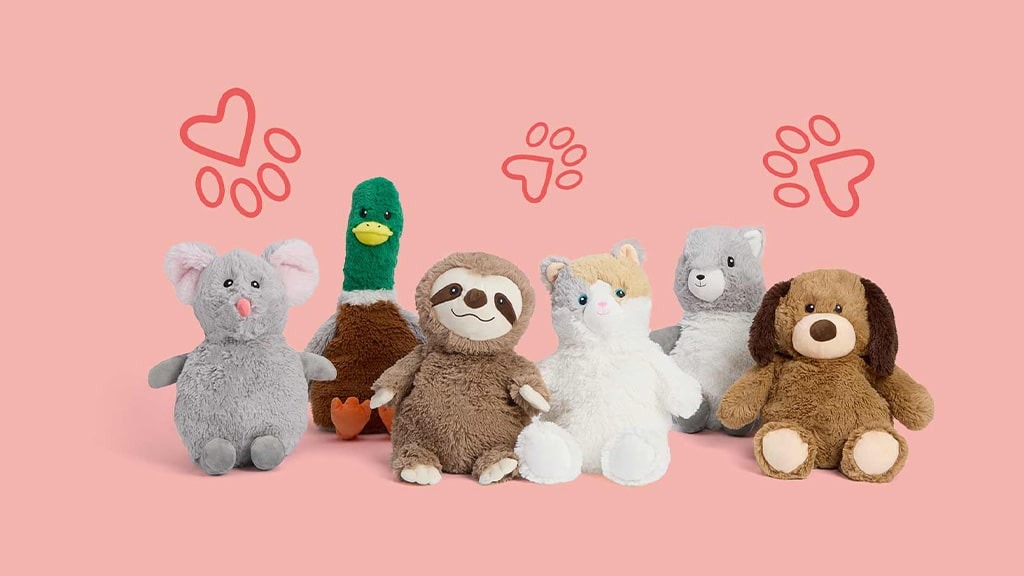
Conventional stuffed animals are typically filled with polyester fiberfill (often called PP cotton), which is light, fluffy, washable (depending on build), and inexpensive. Warmies, by contrast, is positioned as a heated, weighted comfort product using flaxseed and dried French lavender. Warmies USA+2Warmies USA+2
That difference creates very different customer experiences:
- Warmies-style grain fill: warmth + weight + aroma, but needs careful heating rules and often limited washing. Warmies USA+1
- Conventional fiberfill plush: lighter, often more washable, usually no heat function and no built-in scent.
For B2B buyers, the key takeaway is that heated plush is a separate product category with different materials, QC checkpoints, packaging language, and after-sale guidance.
| Comparison point | Warmies-style heated plush | Conventional stuffed animal | What buyers should plan for |
|---|---|---|---|
| Core fill | Flaxseed + dried lavender Warmies USA+2Warmies USA+2 | Polyester fiberfill (typical) | Different supply chain and specs |
| Main benefit | Heat retention + weight + aroma Warmies USA+1 | Softness + light cuddle | Different customer promise |
| Care method | Often surface clean only Warmies USA+1 | Often washable (depends) | Stronger care labeling needed |
| Safety focus | Heating instructions + moisture control Warmies USA+1 | Small parts + seams | Broader risk evaluation for heated lines |
| Product positioning | Wellness/comfort tool | Toy/gift | Different retail category strategy |
Conclusion
Warmies-style heated plush uses flaxseed for warmth and weight and dried French lavender for scent, creating a comfort product with special care and safety needs. At Kinwin, I help global buyers develop heatable and wellness-style plush lines with controlled materials, clear instructions, and stable QC systems. Contact me at [email protected] or visit kinwintoys.com to discuss your next heated plush project and explore how our factory can support your success.