Skip to content
Sewing is the backbone of plush toy manufacturing. While materials, pattern-making, and stuffing shape the concept, it is the sewing stage that determines the toy’s structural strength, aesthetic detail, and long-term durability. Every stitch contributes to how the plush feels, how it holds its shape, and how well it communicates a character’s personality. Different sewing methods support different levels of craftsmanship—from mass-market durability to luxury collectible refinement. Understanding these techniques helps buyers evaluate factory capability, workmanship quality, and consistency across large-volume production. In this guide, we break down the sewing methods used in modern plush toy manufacturing and explain how they influence quality, cost, and brand presentation.
How Hand-Sewing Techniques Enhance Detail, Precision, and Luxury Craftsmanship?
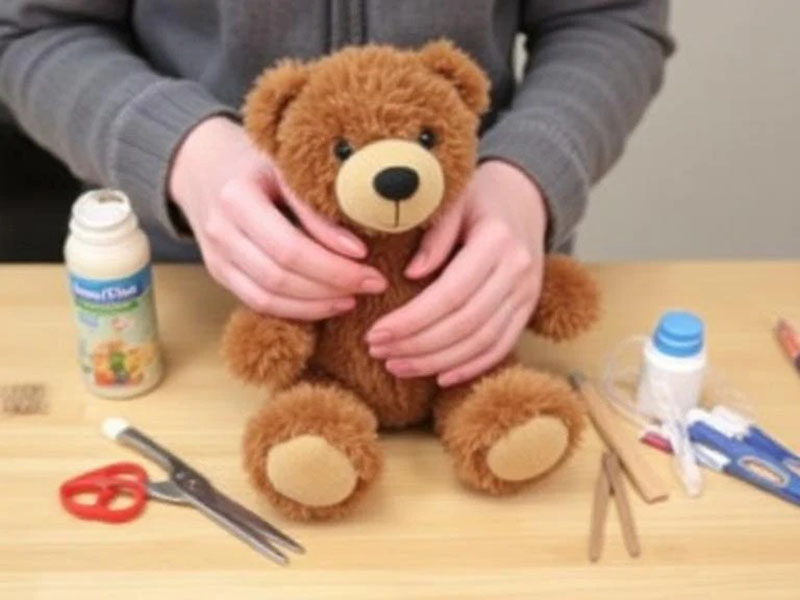
Hand-sewing plays a critical role in plush toy production because certain areas require precision that machines cannot provide. For example, the finishing of a plush toy’s closure seam, the attachment of tiny decorative components, and the sculpting of facial features often depend on skilled hand-stitching. Machine sewing can be too aggressive or imprecise in these delicate areas, especially when dealing with curves, tight corners, or parts that need subtle shaping. Hand-stitching allows artisans to adjust tension, angle, and stitch length for a clean, controlled result.
High-end plush toys, character IP replicas, and baby products often require extensive hand-sewing to achieve seamless transitions between fabric segments and maintain delicate proportions. Hand-sewn sculpting stitches—such as defining a nose bridge or shaping rounded cheeks—give the plush a lifelike expression. Unlike machines, artisans can continually evaluate symmetry and compensate manually for variations in fabric density or pile direction. This creates a level of refinement that mass-market products often cannot match without these hand-finishing steps.
Common Uses of Hand-Sewing in Plush Production
| Hand-Sewing Technique | Application | Benefit |
|---|---|---|
| Ladder stitch | Closing stuffing openings | Invisible finish, smooth seam |
| Whip stitch | Attaching small components | Flexible, strong hold |
| Hand-sculpting stitches | Shaping cheeks, snouts, curves | Adds expression & realism |
| Detail stitching | Tiny accents or decorative parts | Precision where machines can’t reach |
In premium plush toys, hand-sewing is often what gives each unit its polished, luxury feel.
How Machine Stitch Types (Lockstitch, Overlock, Zigzag) Impact Strength and Durability?
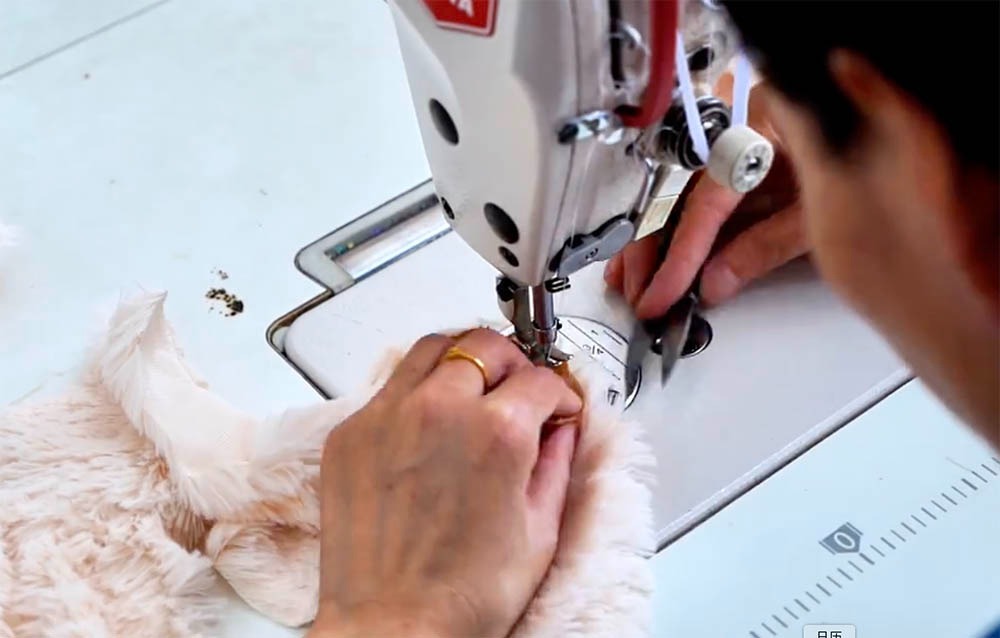
Machine stitching forms the structural framework of every plush toy. Factories choose specific stitch types depending on the fabric, seam placement, tension requirements, and durability expectations. Lockstitch—produced by industrial sewing machines—is the most common and provides clean, strong seams. It is used for structural components like torsos, legs, and heads. Overlock stitching is used on raw edges to prevent fraying and maintain seam stability, which is essential for plush fabrics like minky, velboa, and faux fur.
Zigzag stitching adds flexibility and is ideal for curved areas or fabrics that stretch during stuffing. Reinforced stitches, such as double-stitching or triple-stitching, are added in high-stress zones like neck joints, tail attachments, or heavy accessories. Working with the correct stitch type ensures toys do not burst open during stuffing, play, or transport. Factories with advanced sewing lines adjust stitch width, density, and speed according to fabric behavior—further improving durability and appearance.
Stitch Type Comparison in Plush Manufacturing
| Stitch Type | Strength | Flexibility | Common Use |
|---|---|---|---|
| Lockstitch | High | Low | Main seams, structural assembly |
| Overlock | Medium | Medium | Edge finishing, preventing fray |
| Zigzag | Medium | High | Curves, stretchy fabrics |
| Double-stitch | Very high | Medium | Reinforcing stress points |
Machine stitching ensures every plush toy has a stable foundation.
How Hidden Seams, Ladder Stitching, and Closure Methods Shape Final Appearance?
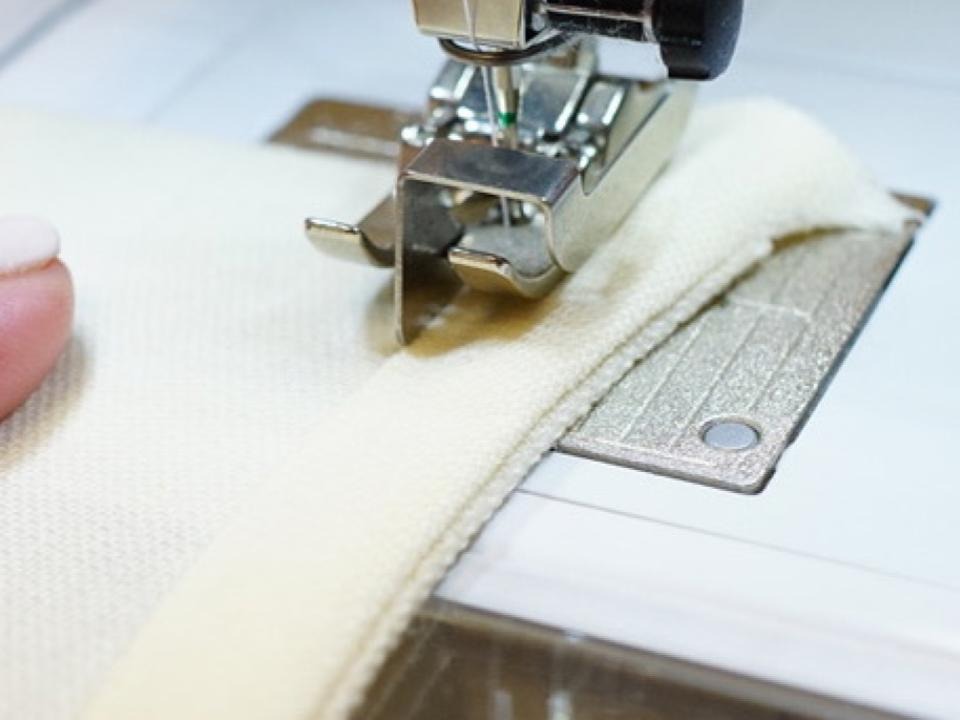
The final closure of a plush toy—usually done after stuffing—is one of the most visible indicators of craftsmanship. A poorly executed closure seam can distort the plush toy’s shape, create wrinkles, or make the product look low-quality. Ladder stitching and blind stitching are the preferred methods because they allow the seam to close invisibly. These stitch types “hide” the thread within the fabric, allowing the opening to blend seamlessly with surrounding material.
Hidden seams are also used to shape facial areas or attach pieces without leaving exposed stitching lines. For premium plush collections, collectors often look for invisible or minimal seams because they give the plush a refined, sculpted look. The closure technique also affects structure—if closed too tightly, the plush may pucker; too loosely, and stuffing may shift or become uneven over time.
Closure Techniques and Their Effects
| Technique | Appearance Impact | Structural Impact |
|---|---|---|
| Ladder stitch | Invisible seam | Smooth, stable surface |
| Blind stitch | Minimal surface visibility | Strong but soft finish |
| Hidden seam | No external stitches | Clean, luxury look |
| Reinforced closure | Slightly rigid | Ideal for high-stress areas |
High-level factories train team members specifically for closure work because the final few stitches often determine the plush toy’s perceived quality.
How Seam Allowances, Tension Control, and Fabric Behavior Affect Stitch Quality?
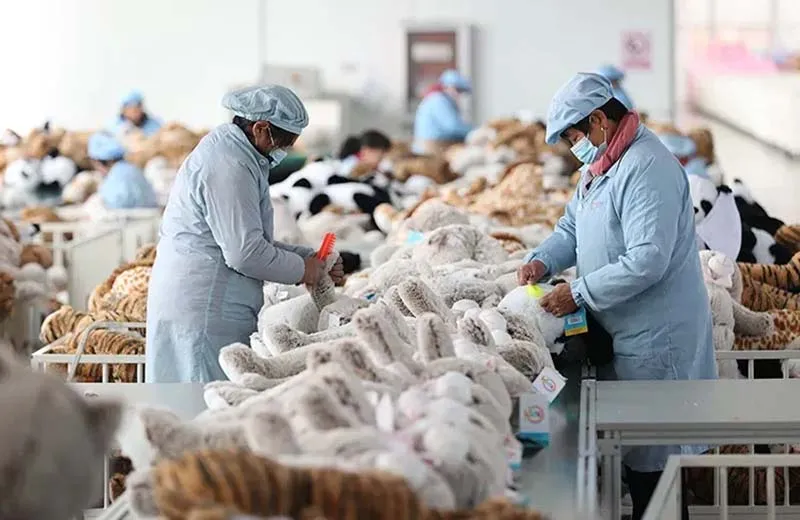
One of the most technically demanding aspects of plush toy sewing is controlling seam allowance and thread tension. Plush fabrics stretch, compress, and shift differently depending on fiber content, pile height, and backing strength. If the machine tension is too high, seams become wavy or cause fabric distortion. If too low, stitches become loose and unsafe. Seam allowance directly affects final proportions—just 1–2 mm variation across dozens of seams can noticeably change the toy’s appearance.
Factories train sewing operators to adjust machine tension frequently based on fabric batch behavior. Pile fabrics often require stabilizing layers or differential feed adjustments to prevent creeping during stitching. Soft fabrics like minky need gentle handling to avoid compressing fibers, while stiff backing fabrics require stronger tension. Quality factories use standard seam allowances (often 5–7 mm for plush toys) and implement strict QC checks to ensure every seam meets the required specifications.
How Technical Settings Affect Stitch Outcome
| Variable | Incorrect Result | Correct Adjustment |
|---|---|---|
| Tension too tight | Puckering, distortion | Loosen tension |
| Tension too loose | Weak seams, gaps | Tighten tension |
| Small seam allowance | Bulging or weak shapes | Increase allowance |
| Stretchy fabric | Inconsistent stitching | Use stabilizer or adjust feed |
Achieving flawless seam quality requires understanding both the fabric and the sewing machine’s mechanical behavior.
How Specialized Sewing for Small Parts, Curves, and Complex Shapes Is Executed?
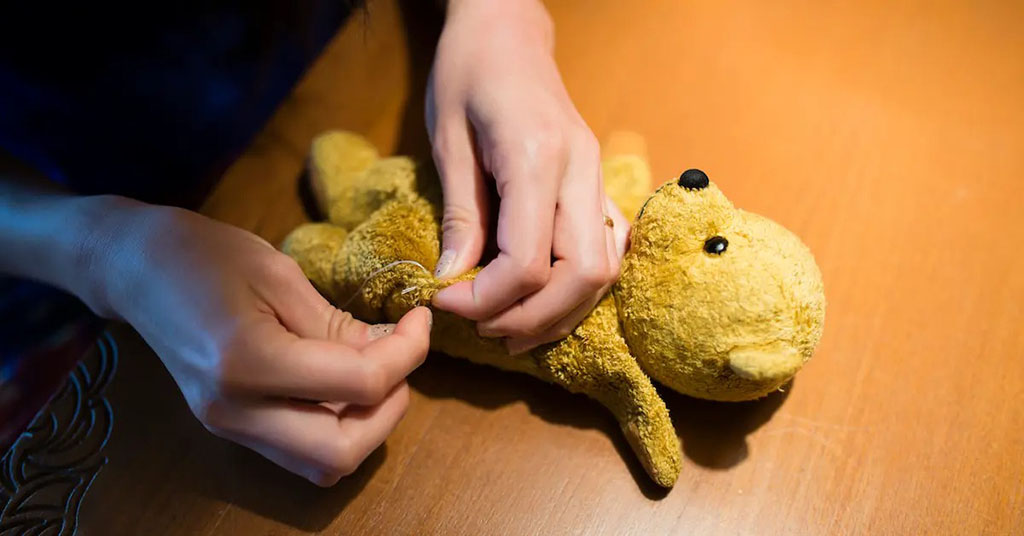
Complex plush toys require specialized sewing techniques—especially for tiny components, tight curves, or multi-layered shapes. Small limbs, ears, horns, tails, and accessories must be sewn precisely to avoid distortion during stuffing. Operators use shorter stitch lengths to maintain clean curvature and prevent angular edges. They also slow down machine speed for accuracy, particularly around facial features or areas requiring symmetrical results.
Factories assign the most experienced workers to complex plush designs because these areas often define the toy’s identity and expression. Sewing curves smoothly takes significant skill; too much pressure on the presser foot, improper rotation, or uneven feeding can create wobbly edges. Advanced factories also use jigs, templates, and alignment guides to ensure accuracy during repetitive sewing tasks.
Specialized Sewing Applications
| Plush Feature | Sewing Challenge | Required Skill |
|---|---|---|
| Small limbs or ears | Tight spaces, delicate shape | Micro-stitch control |
| Rounded heads / cheeks | Maintaining smooth curves | Curve rotation sewing |
| Multi-layer details | Thickness & slippage | Precision alignment |
| Textured fabrics | Irregular pile | Fabric-stabilizing techniques |
Complex sewing is where the craftsmanship of the factory becomes most visible.
How Consistent Sewing Standards Ensure Uniformity in Mass Plush Toy Production?
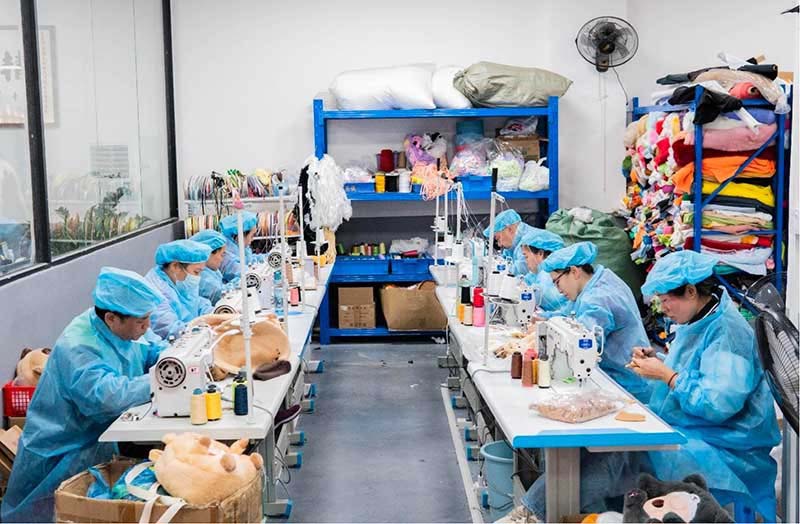
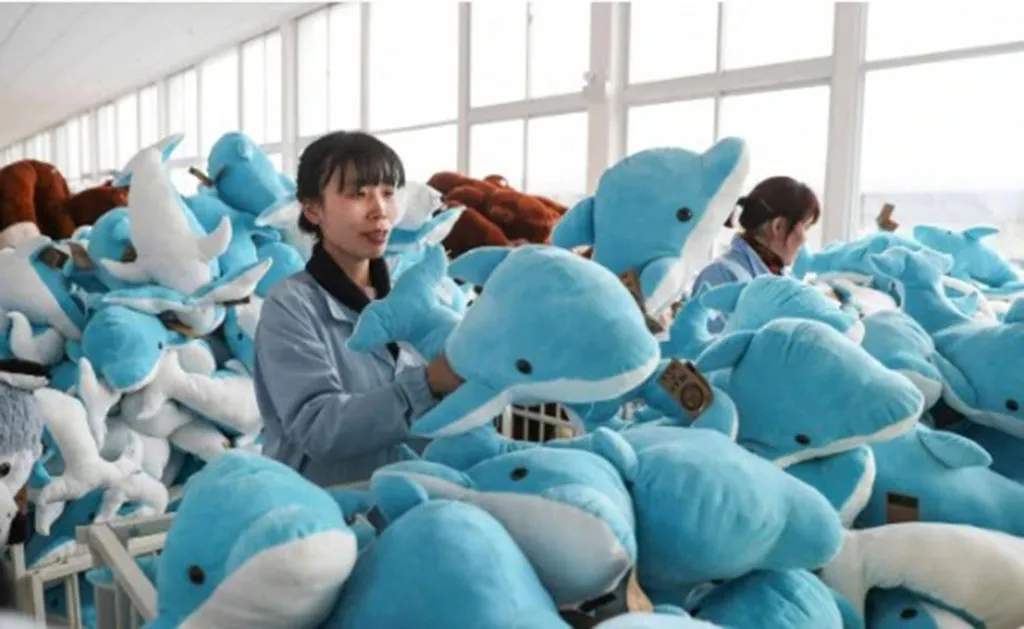
Uniformity in mass production is maintained through strict sewing standards and process controls. Without standardization, each batch—or even each piece—could vary in shape, size, firmness, or symmetry. Factories implement standardized sewing SOPs (Standard Operating Procedures), workstation guides, sample boards, and real-time QC checks to prevent variation.
Consistency begins with the Golden Sample, which sets visual and structural benchmarks for all workers and QC teams. Factories conduct training sessions to ensure every sewer understands stitch length requirements, seam allowance rules, and sewing order. In-line QC teams monitor output throughout the day, inspecting seam quality, symmetry, tension, and accuracy against the approved standard.
Production Consistency Controls
| Control Method | Purpose | Result |
|---|---|---|
| Golden Sample reference | Sets the visual + structural benchmark | Uniform output |
| Sewing SOPs | Guides each step | Reduces variability |
| First-piece approval | Validates setup for each batch | Early error correction |
| In-line QC checks | Continuous monitoring | Prevents large-scale defects |
| Skill-matched worker assignment | Aligns complexity to ability | Higher accuracy |
High-volume buyers rely on factories capable of maintaining these controls during long production runs, ensuring the final shipment meets brand standards.
Conclusion
Sewing is at the heart of plush toy production, influencing structure, durability, expression, and overall craftsmanship. Understanding the differences between hand-sewing, machine stitching, closure methods, tension control, and specialized sewing helps brands select the right manufacturing partner. Factories like Kinwin combine skilled artisans, advanced equipment, and strict QC systems to ensure every plush toy—from simple shapes to complex character replicas—meets global quality expectations with consistency.
📧 Contact: [email protected]
🌐 Visit: https://kinwintoys.com