Skip to content
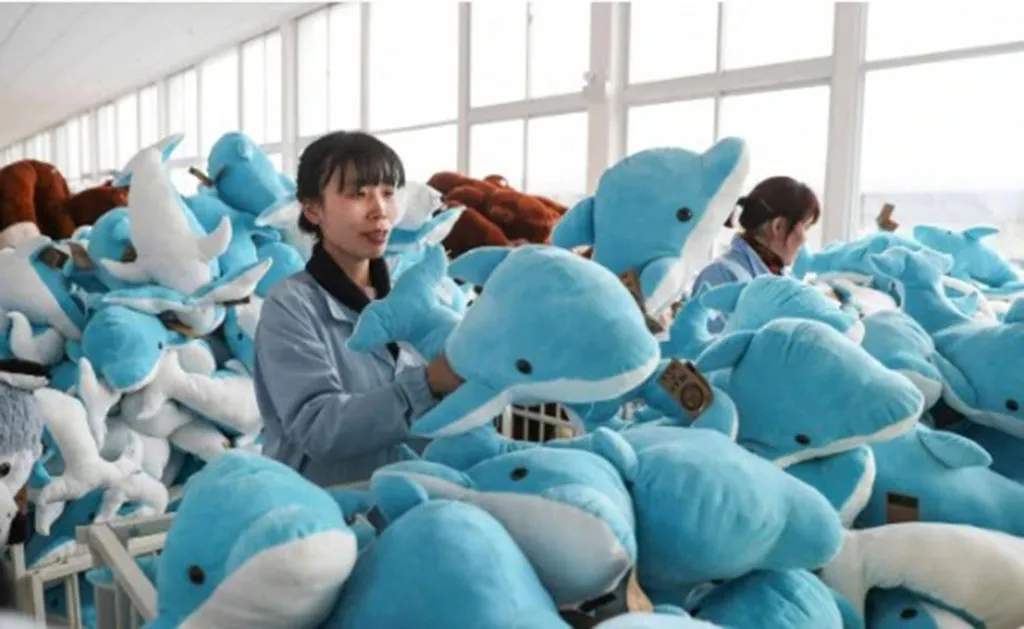
Consistency is one of the most challenging aspects of large-scale plush toy manufacturing. When an order grows into thousands or tens of thousands of units, even minor deviations in materials, stitching, or proportions can lead to noticeable inconsistencies across batches. Maintaining uniformity requires more than simply repeating the production cycle—factories must rely on strict material controls, standardized engineering, skilled workmanship, and multi-stage quality inspections. For global brands, ensuring consistency is not only about product quality but also about protecting brand identity and customer trust. This guide breaks down how reliable manufacturers manage every detail to keep large plush toy orders consistent, accurate, and compliant.
How Material Standardization and Pre-Approved Swatches Maintain Quality Consistency?
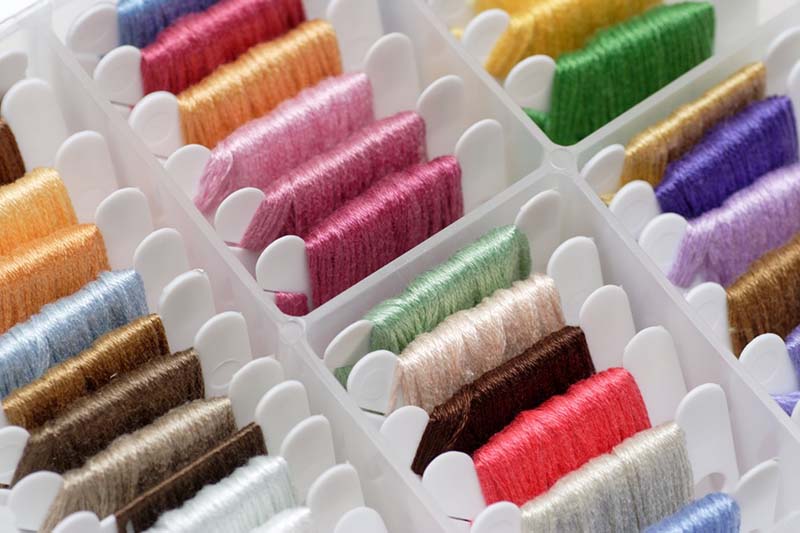
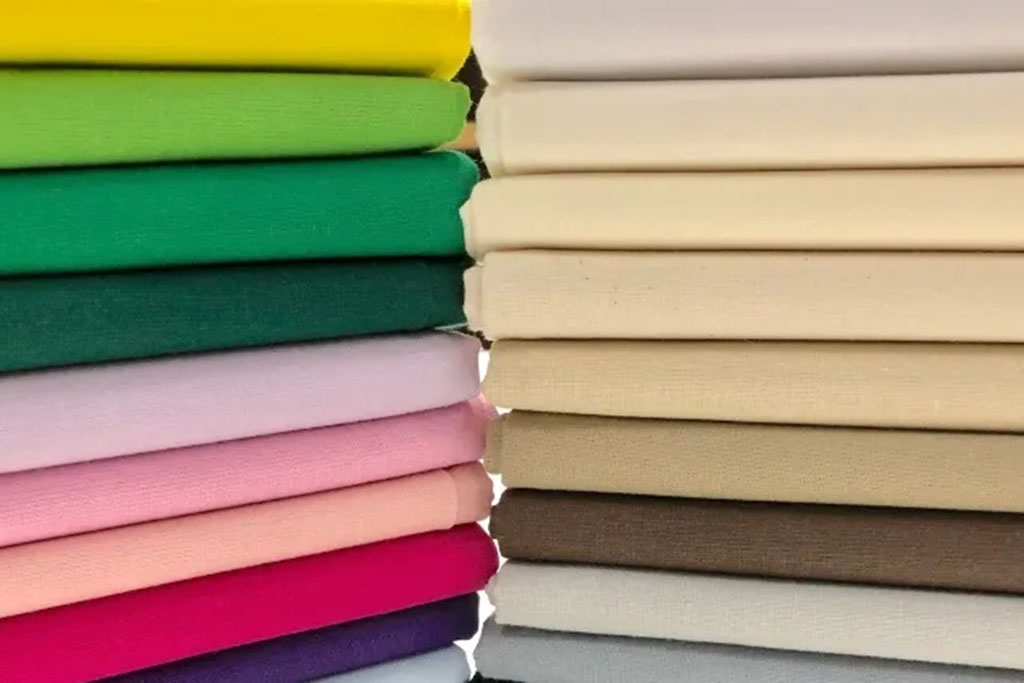
Material standardization forms the very foundation of consistency in mass plush toy production. Before manufacturing begins, reputable factories request the buyer to approve fabric swatches, trim options, embroidery threads, Pantone colors, and filling specifications. These pre-approved materials serve as the master reference for bulk purchasing, ensuring that every yard of fabric used throughout the production cycle matches the original standard in texture, pile direction, density, softness, and color.
Factories also conduct incoming material inspections to verify that fabrics from suppliers match the approved swatches. This includes checking colorfastness, pile height, stretch stability, backing structure, and batch uniformity. Because plush fabric is sensitive to dye-lot variation, top manufacturers lock specific dye batches for the entire order or pre-book fabric runs to avoid inconsistencies. When fabric direction matters—such as with faux fur or velboa—the factory also ensures that all parts are cut following the same grain direction to prevent shading or mismatched texture.
| Material Control Step | Purpose | Outcome |
|---|---|---|
| Pre-approved swatch set | Defines exact texture & color | Eliminates guesswork |
| Dye-lot verification | Prevents tonal variation | Visual consistency |
| Fabric grain direction control | Ensures uniform appearance | Higher aesthetic quality |
| Filling density standard | Regulates softness & firmness | Stable plush feel |
| Supplier alignment | Locks material specs | Reduced risk of variation |
Material standardization ensures the entire production behaves like a single continuous batch—even when sourced or produced over multiple days.
How Detailed Tech Packs and Construction Guidelines Prevent Production Variations?
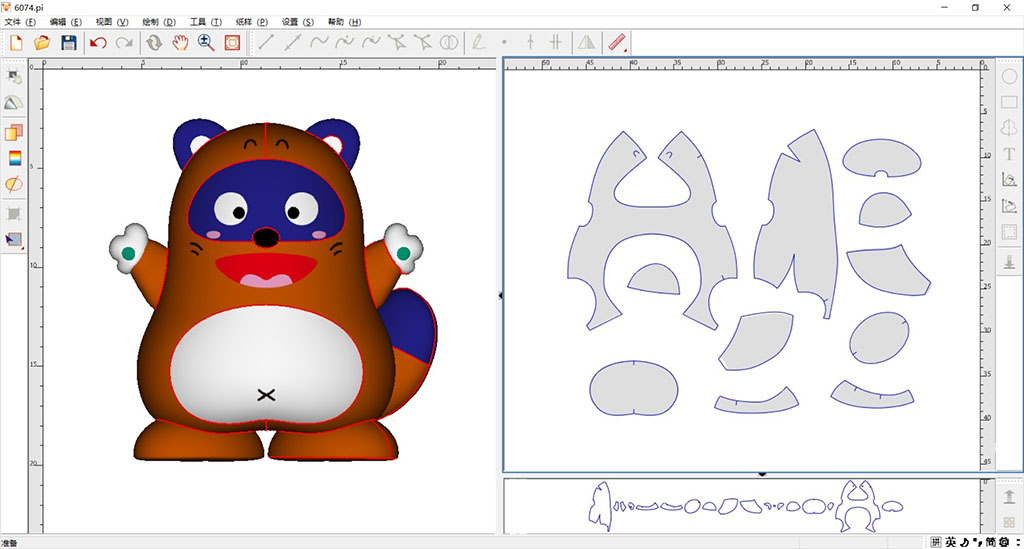
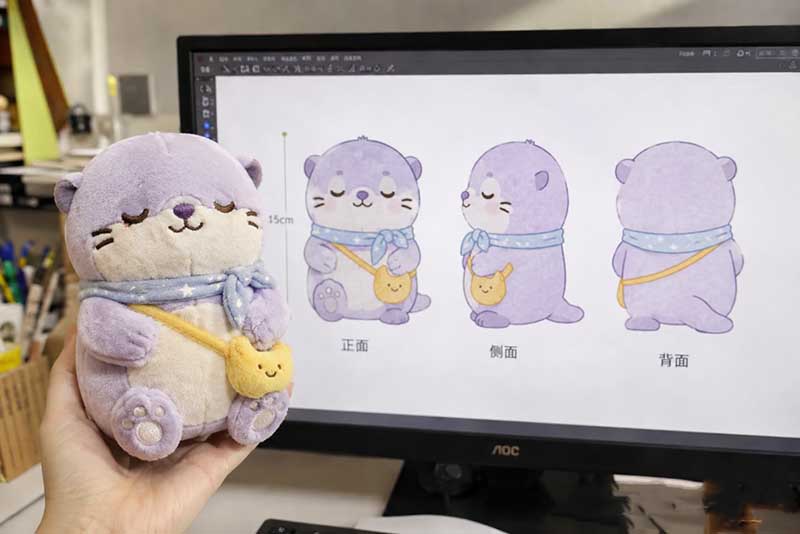
A comprehensive tech pack is essential for eliminating guesswork during large-volume production. High-quality factories rely on extremely detailed documents that break down every component of the plush toy: pattern dimensions, seam allowances, stuffing instructions, fabric mapping, embroidery positions, Pantone codes, safety requirements, and assembly diagrams. These documents act as the “instruction manual” for all sewing teams, cutters, embroiderers, and QC inspectors.
Well-prepared tech packs minimize interpretation errors by providing clear visual diagrams and standardized construction notes. For example, a tech pack may include stuffing density guidelines for the head, body, limbs, and tail, indicating precise firmness levels to maintain consistent shape. Embroidery files are digitized with exact stitch counts, thread colors, and placement coordinates. Factories also prepare internal SOPs (Standard Operating Procedures) for complex designs to ensure every production worker follows identical steps.
| Tech Pack Element | What It Controls | Benefit |
|---|---|---|
| Pattern layouts | Shape & proportions | Prevents deformation |
| Embroidery files | Eye/face accuracy | Consistent expression |
| Fabric mapping | Material placement | Correct texture distribution |
| Assembly steps | Sewing order | Reduced variation |
| Stuffing instructions | Density & distribution | Uniform firmness |
The more detailed the instructions, the fewer variations appear across thousands of units.
How In-Line QC, AQL Standards, and Multi-Stage Inspections Control Defects?
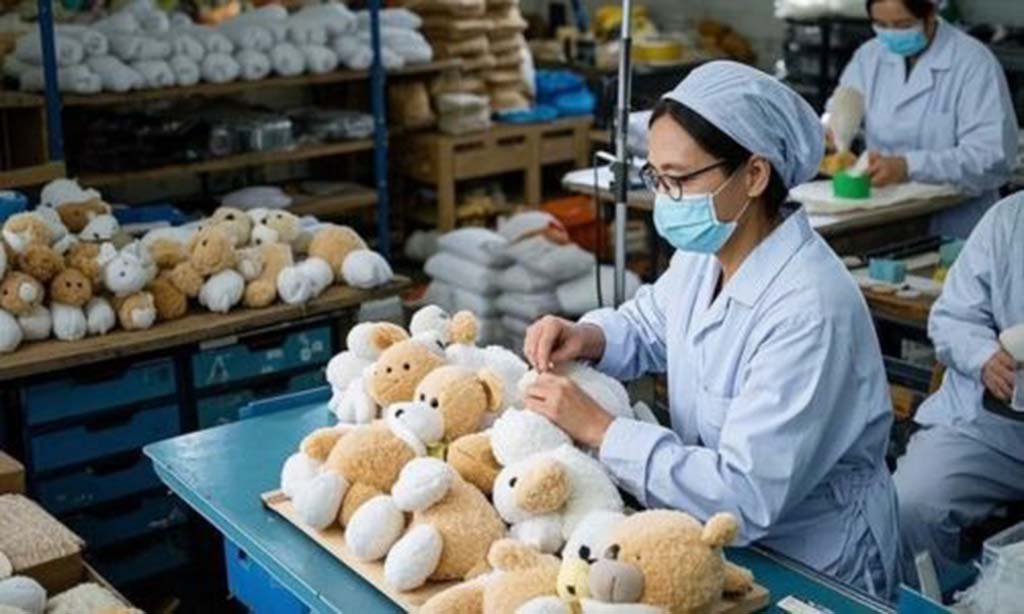
High-volume plush production requires quality checks at every phase—waiting until final inspection is not enough. Factories implement a layered QC system with checkpoints during cutting, sewing, embroidery, stuffing, and finishing. This prevents small issues from escalating into large-scale defects.
In-line QC teams monitor seam strength, symmetry alignment, stuffing weight, embroidery quality, label placements, and accessory attachment. After major stages, AQL sampling is applied (typically 1.5–2.5 for plush toys) to catch early signs of inconsistency. Premium factories also use “Golden Samples” and “Production Masters” as the reference standard, using them to compare bulk units for accuracy.
Multi-stage QC often includes:
- Cutting QC – Ensures fabric grain direction and pattern accuracy
- Sewing QC – Checks stitch quality, seam closeness, symmetry
- Stuffing QC – Evaluates firmness, shape, and silhouette
- Final QC – Reviews expression, grooming, accessories, hangtags
- Random sampling – Confirms batch reliability before packing
| QC Stage | Controlled Variable | Impact |
|---|---|---|
| Cutting QC | Pattern accuracy | Prevents asymmetry |
| Sewing QC | Stitch & seam consistency | Ensures durability |
| In-line QC | Real-time correction | Reduces mass defects |
| Post-stuffing QC | Density & shape | Plush stability |
| Final QC | Aesthetic consistency | Retail-ready appearance |
Layered quality control ensures defects are caught early, not discovered at shipment time.
How Workforce Training and Skill Level Affect Sewing Accuracy and Assembly Quality?
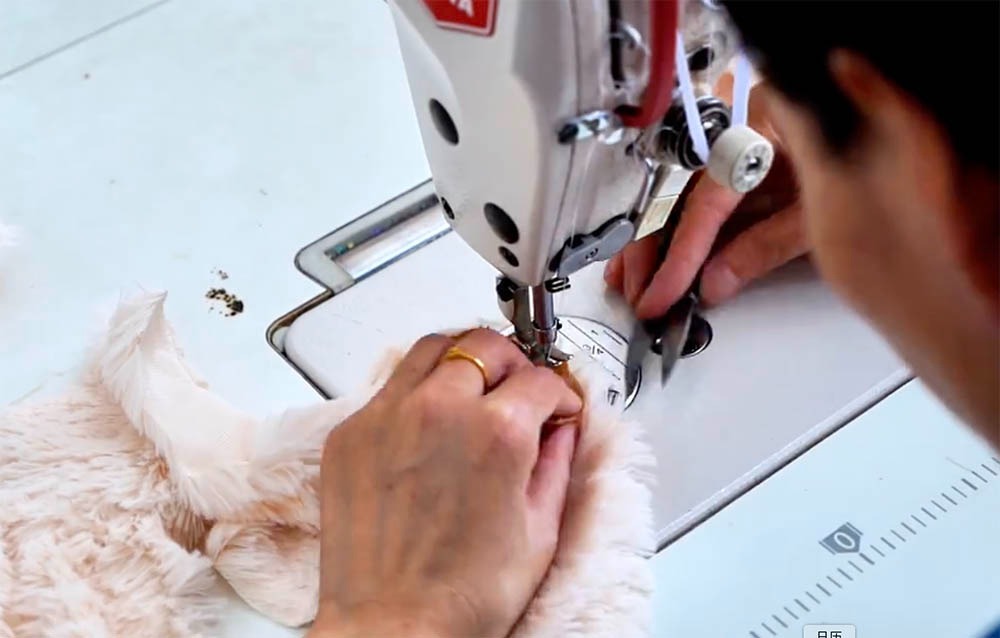
Even with perfect materials and documents, the skill of the workforce directly impacts product consistency. Plush toy manufacturing requires precision—uneven stitching by even 2–3 mm can dramatically affect facial expression or limb positioning. Therefore, reputable factories train workers extensively on specific plush models before large-scale production begins.
Operators practice sewing curved seams, attaching small components, managing delicate fabrics, and performing consistent stuffing. Factories often implement a “training line” to refine techniques, especially for complex or high-detail plush toys. Moreover, experienced workers are assigned to difficult tasks such as facial construction, embroidery placement, and detailed finishing.
Factories that invest in training can maintain stable production quality even during peak seasons or when scaling up to large teams.
| Skill Area | Importance for Quality |
|---|---|
| Curved seam control | Prevents distortion of facial/body shape |
| Embroidery alignment | Maintains character accuracy |
| Consistent stuffing | Ensures balanced firmness |
| Precision trimming | Enhances final appearance |
| Accessory attachment | Ensures safety compliance |
Skilled, well-trained workers are essential for achieving high-precision plush toys at scale.
How Batch Testing, Safety Compliance, and Needle Detection Safeguard Final Output?
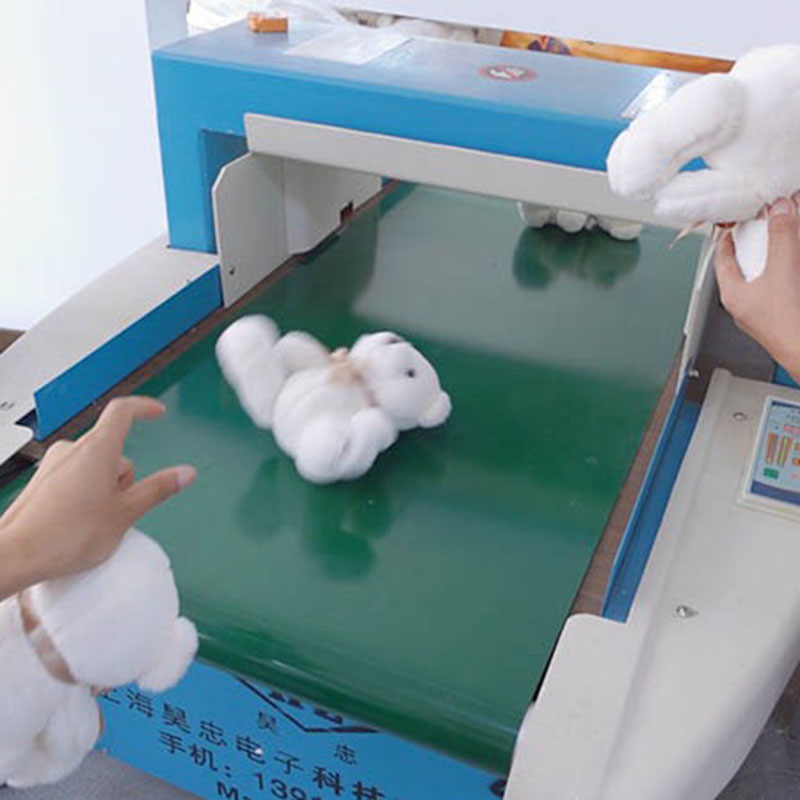
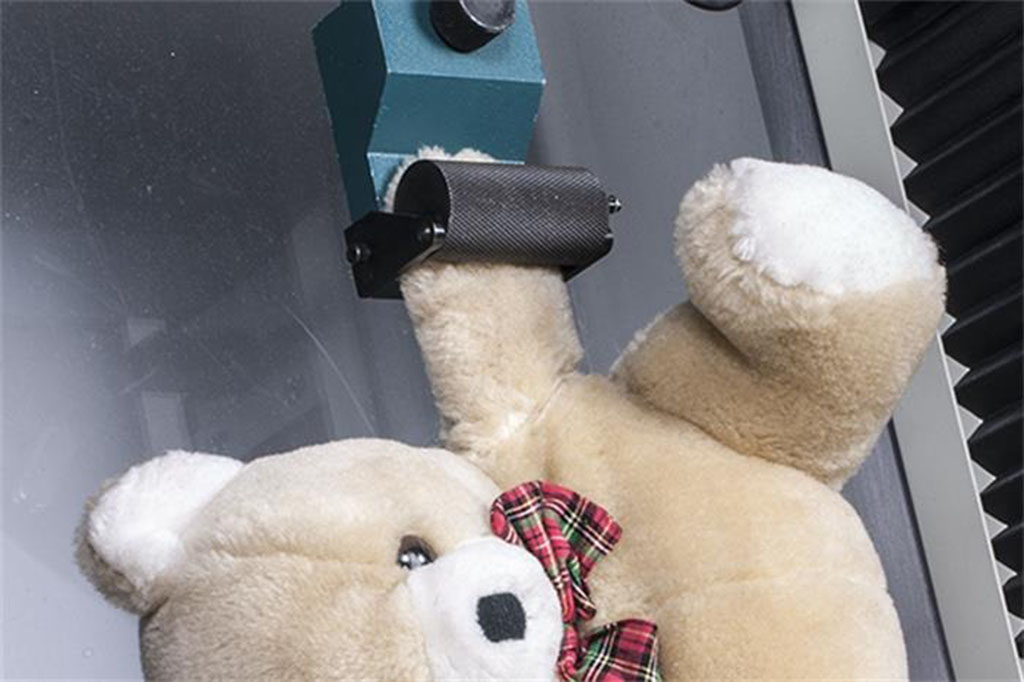
Safety compliance is non-negotiable in plush toy manufacturing. Large batches must undergo stringent testing to ensure they meet international standards like EN71, ASTM F963, CPSIA, or ISO 8124. Factories conduct internal batch tests before sending units for third-party lab testing. These tests include seam strength, tension testing, colorfastness, flammability, and chemical safety analysis.
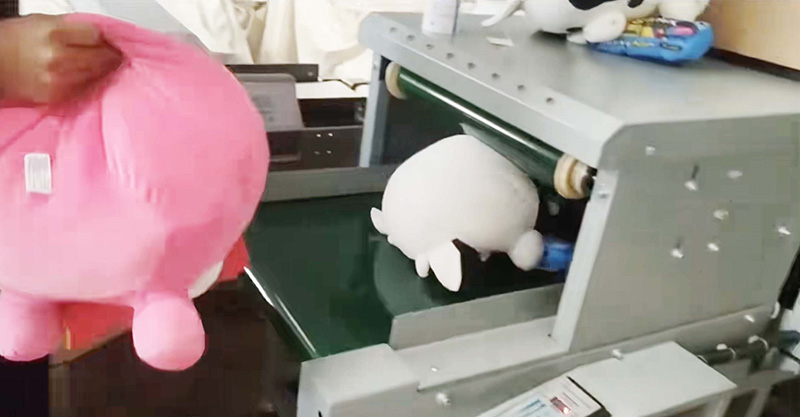
Needle detection is a critical final step. Every carton must pass through a needle detector calibrated at 1.0–1.2 mm sensitivity, ensuring no broken needles or metal fragments remain inside the plush toy. For premium or infant-safe products, double-pass or multi-angle metal detection is implemented.
| Safety Measure | Purpose | Benefit |
|---|---|---|
| Batch testing | Checks material & construction safety | Compliance assurance |
| Needle detection | Detects metal contamination | Child safety |
| Lab certification | Confirms regulatory compliance | Market access |
| Tension testing | Ensures durability | Prevents hazards |
| Colorfastness test | Avoids dye transfer | Product reliability |
These steps protect both brands and consumers by ensuring every unit meets the required safety benchmark.
How Clear Communication, Production Milestones, and Feedback Cycles Keep Large Orders on Track?

Large plush orders require structured communication to avoid misunderstandings, delays, and quality deviations. Factories and buyers must work through clearly defined milestones, typically including:
- Material procurement confirmation
- Pre-production sample (PPS) approval
- Production start
- First-batch inspection
- Mid-batch QC review
- Final mass production QC
- Packing and export readiness
Regular communication—via weekly reports, video updates, or photographed QC results—helps all stakeholders stay aligned. Feedback cycles ensure that any issues detected early can be corrected before the entire batch is completed. Factories with English-speaking project managers or dedicated account teams maintain smoother communication, especially for global brands operating in different time zones.
| Communication Tool | What It Ensures |
|---|---|
| PPS approval | Confirms production accuracy |
| Weekly reports | Maintains project visibility |
| QC photo updates | Transparency in quality |
| Milestone tracking | Prevents scheduling delays |
| Feedback loops | Fast issue resolution |
Clear communication is the backbone of consistent, timely large-order production.
Conclusion
Ensuring consistent quality in large plush toy orders requires a finely coordinated system of material control, precise engineering, skilled craftsmanship, and strict quality assurance. From standardized fabrics and detailed tech packs to multi-stage QC and structured communication, each component plays a vital role in creating reliable, high-quality plush toys at scale.
Factories like Kinwin combine technical expertise with strong production systems to deliver consistent results—even for complex designs and high-volume orders. For global brands seeking reliability, uniformity, and long-term production confidence, choosing the right manufacturing partner is the key to success.
📧 Contact: [email protected]
🌐 Website: https://kinwintoys.com