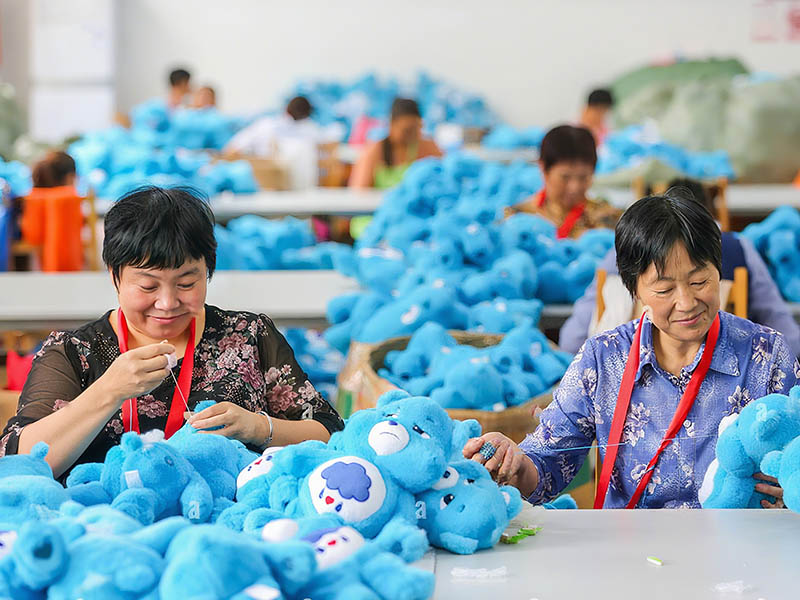
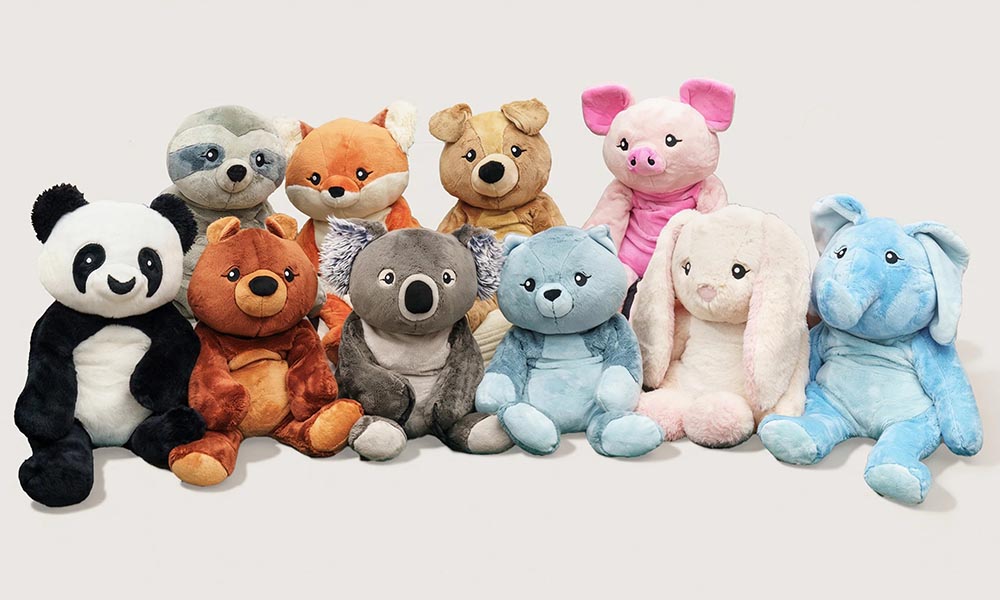
High-end plush toys are created through a deeply refined, carefully engineered manufacturing process that blends technical accuracy with artisanal craftsmanship. Unlike mass-produced plush items, premium plush toys must express emotional warmth, character integrity, and luxury-level finishing. Every step—from engineering and material selection to sewing, QC, and final packaging—is executed with a higher standard of precision. This guide takes you inside the workflow used by factories that specialize in premium plush production, helping brands understand what differentiates high-end manufacturing from regular plush production.
How Premium Plush Toy Designs Are Engineered for Shape, Detail, and Durability
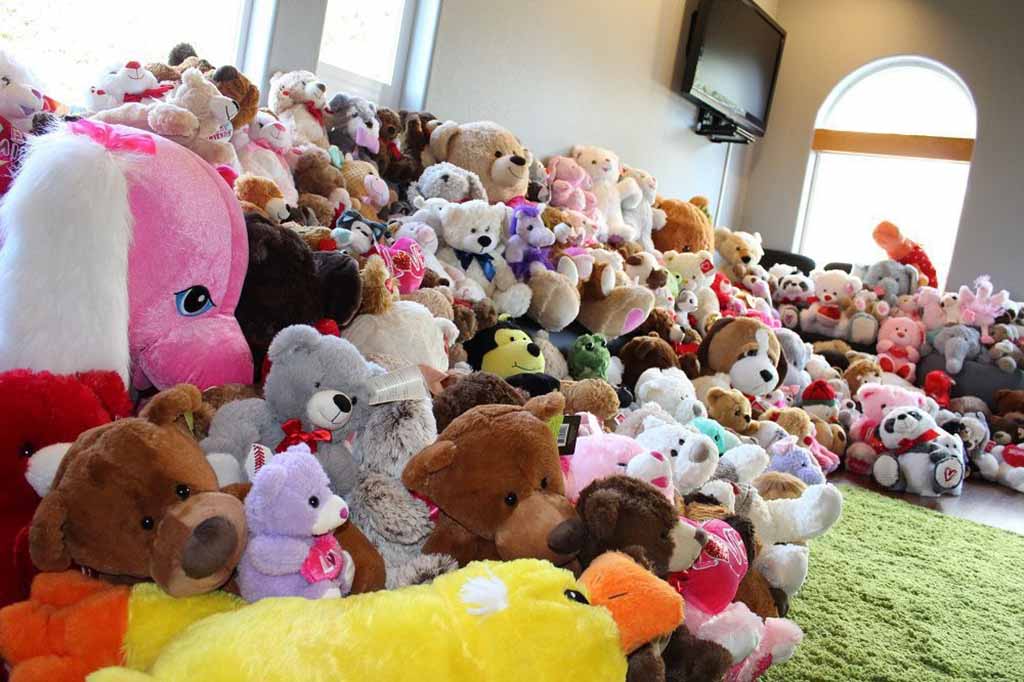
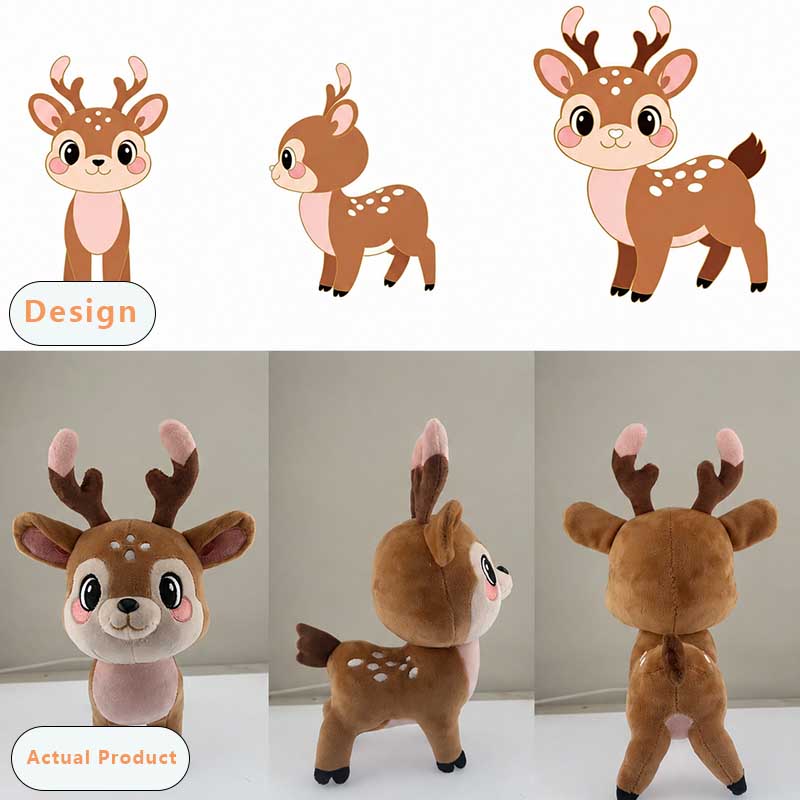
Premium plush design begins long before the first piece of fabric is cut. The engineering stage involves analyzing the character’s visual identity, structural balance, and long-term durability requirements. High-end plush toys must maintain their intended shape even after long-term display, gentle play, or handling, so engineers closely study how the plush will sit, stand, or pose. They determine whether the plush requires internal support—such as foam plates, stabilizing mesh, weighted pellets, or wire frames—especially when the character has oversized features, stylized proportions, or thin limbs that could deform without reinforcement.
This early engineering work also ensures the toy will withstand handling without losing its intended silhouette. Complex characters may require layered internal shaping, reinforced joints, or carefully calculated seam placement to prevent stretching. High-end plush toys also demand facial accuracy; a small shift in eye placement or expression can alter the entire personality of the toy. For IP-driven designs, “expression accuracy” becomes a top engineering priority, and factories may use digital symmetry tools or overlay grids to secure proportions during development.
| Engineering Focus | Purpose | Result |
|---|---|---|
| Structural geometry | Maintain 3D shape | Clean, stable silhouette |
| Reinforced stress points | Prevent wear & tear | Longer-lasting durability |
| Internal supports | Avoid deformation | Premium stability |
| Proportion mapping | Match original design | Character accuracy |
| Facial symmetry | Preserve expressions | High visual fidelity |
When engineering is done correctly, the plush toy can achieve a polished, premium appearance that feels intentional and luxurious.
How Material Selection and Fabric Grading Influence High-End Product Quality
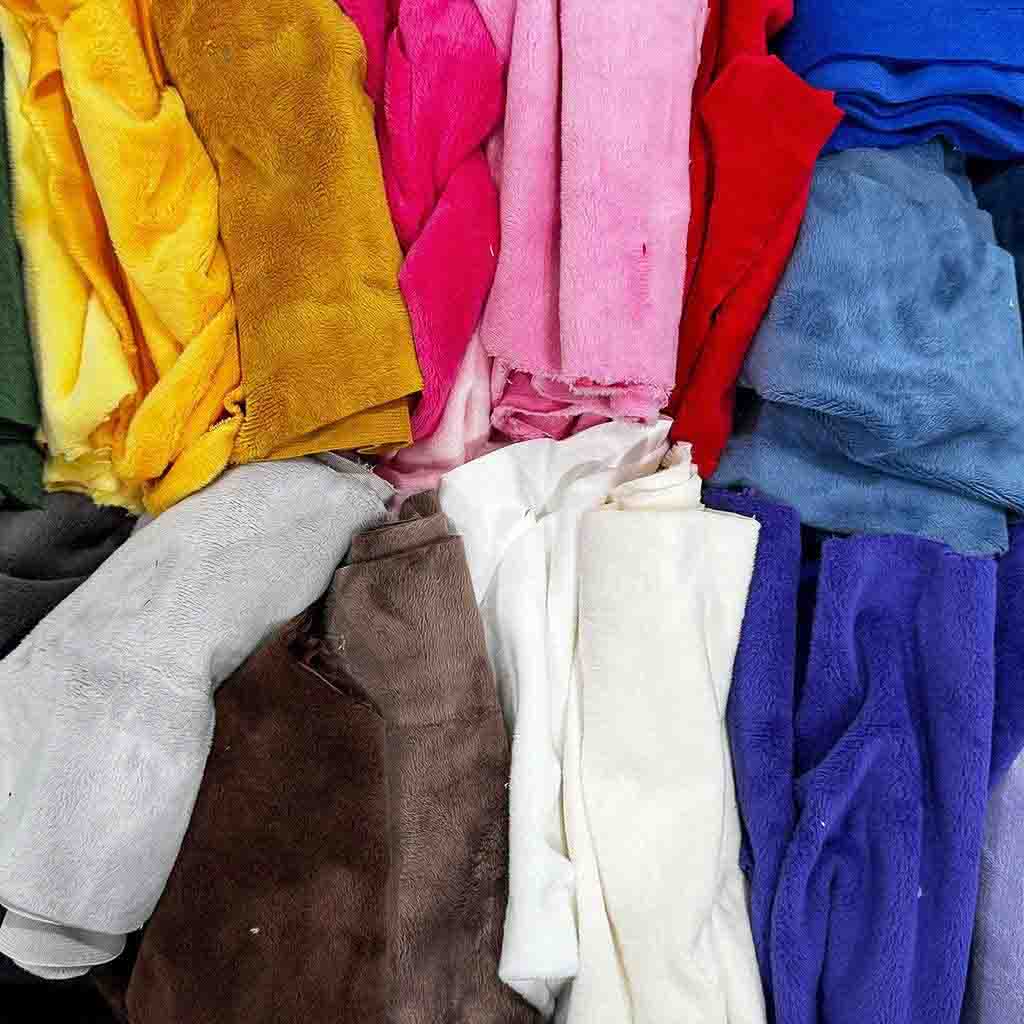
Material selection defines the identity of a premium plush toy. High-end plush items require fabrics that feel exceptionally soft, maintain consistent texture, and deliver rich color depth. Factories evaluate material properties such as pile density, fiber smoothness, stretch behavior, and light reflection. Premium minky, high-density velboa, wool blends, faux cashmere, enhanced faux fur, or custom-dyed fabrics are often selected for luxury plush items.
The factory also performs fabric grading to ensure consistent quality across production batches. During this process, fabrics are tested for colorfastness, surface shedding, abrasion resistance, shrinkage, and pile recovery after compression. For plush toys that rely heavily on visual realism—such as animal plush with gradient fur—fabric direction and fiber grain alignment become crucial. High-end brands often approve fabric swatches under multiple lighting environments to avoid unexpected visual changes in retail settings.
Premium plush production also accounts for sustainability expectations. Many global brands now request recycled polyester filling, eco-friendly dyes, and certified sustainable textiles. While these materials elevate brand value, they also require careful selection to maintain softness and structural integrity.
| Fabric Criteria | Importance in Premium Plush |
|---|---|
| Pile height & density | Defines softness and surface clarity |
| Colorfastness | Prevents fading or uneven tones |
| Fiber smoothness | Enhances tactile luxury |
| Stretch stability | Ensures shape consistency |
| Eco-friendly options | Supports sustainable branding |
Material selection is one of the most impactful decisions in the entire manufacturing workflow.
How Precision Pattern Making Shapes the Foundation of Luxury Plush Construction
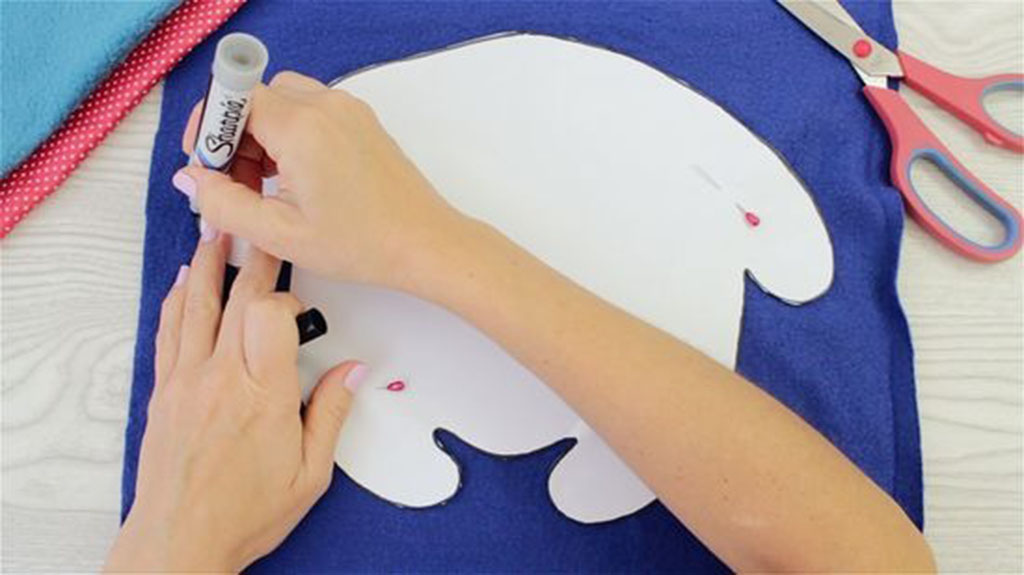
Pattern making is the backbone of high-end plush manufacturing. Skilled pattern makers translate 2D drawings or 3D designs into complete 3D templates with perfect volume and clean curvature. Unlike mass-market plush toys, premium versions require more intricate pattern segmentation, allowing the plush to closely match artistic proportions without distortion.
Pattern makers evaluate each curve, joint, and shape transition. They determine the ideal seam lines to avoid unwanted creases or bulges. For characters with detailed expressions, the pattern must ensure that the face sits smoothly without warping once stuffed. Pattern makers often create test structures using paper models or digital sculpting software to predict how the plush will behave when sewn and filled.
This level of refinement ensures the final plush toy retains crisp contours, elegant shaping, and perfect symmetry—qualities collectors and premium buyers notice immediately.
| Pattern Maker Decision | Effect on Product |
|---|---|
| Seam placement | Smooth surface finish |
| Piece segmentation | Detailed shaping accuracy |
| Fabric orientation | Controls stretch & symmetry |
| Volume mapping | Defines silhouette integrity |
| Internal reinforcement alignment | Ensures stable structure |
Pattern making determines whether the plush will look luxurious or generic—a crucial difference for premium brands.
How Skilled Sewing, Assembly, and Handcraft Techniques Elevate Craftsmanship
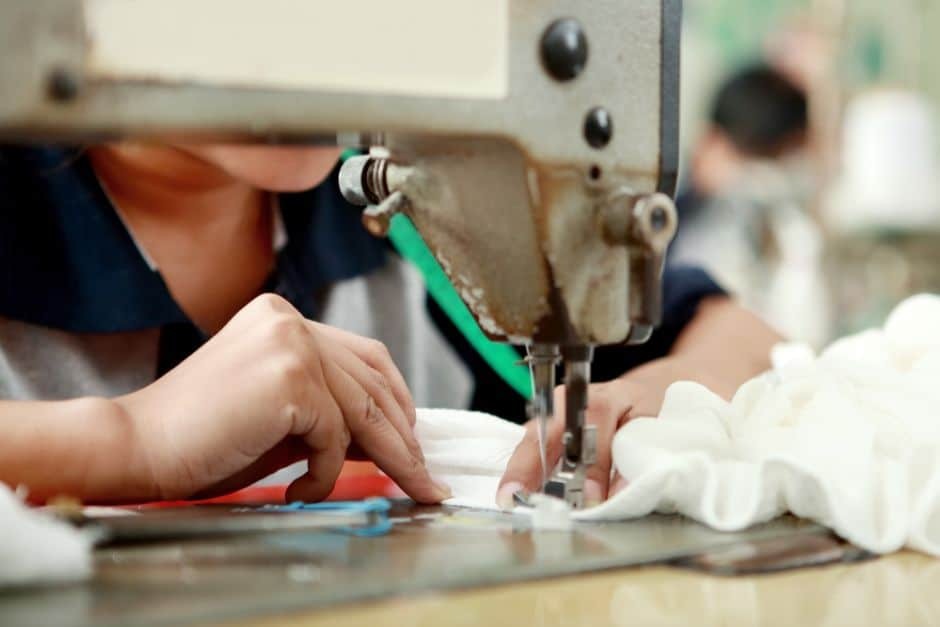
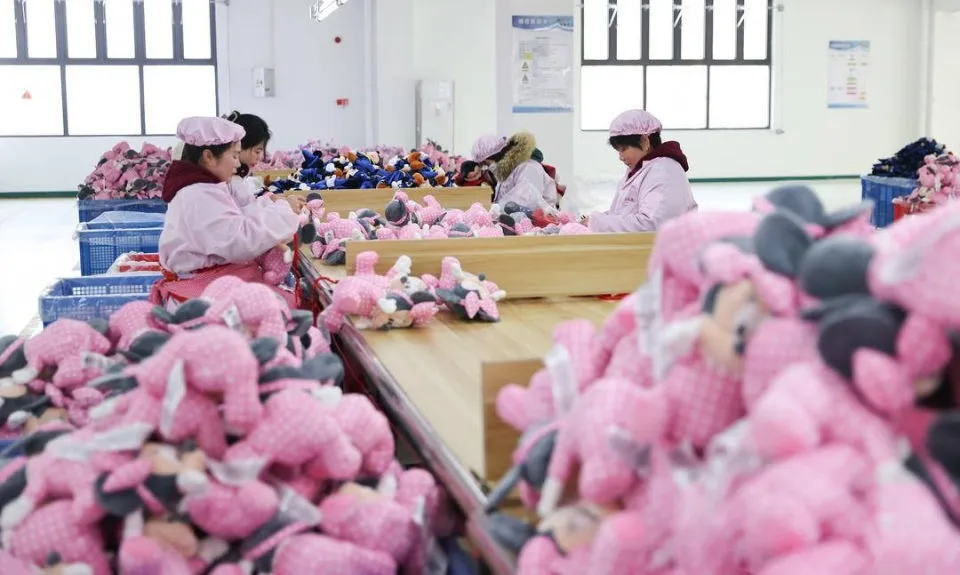
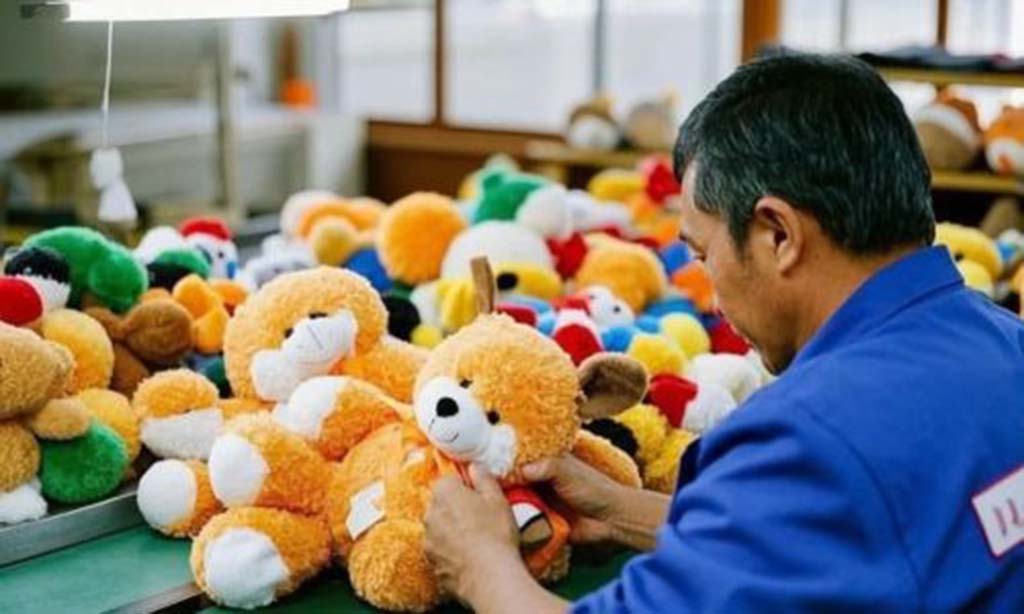
The sewing and assembly phase is where the artistry of premium plush creation becomes visible. High-end factories rely on specialized artisans who understand fabric behavior, shaping techniques, and detail finishing. Sewing teams use precise stitches to maintain symmetry, and often combine machine stitching for strength with hand-sewing for invisible finishing.
Premium plush production includes:
- Hand-aligned seams for precise shape control
- Blind stitching to hide seam lines for a cleaner finish
- Advanced embroidery techniques for detailed eyes, logos, or character marks
- Controlled stuffing methods to avoid lumps, dents, or uneven textures
- Custom trimming and grooming for faux fur animals
- Careful accessory attachment for clothing, props, or fabric embellishments
Every plush must pass the “craftsmanship check”—a visual inspection to ensure grooming, proportions, and shaping are perfect. The human skill involved is one of the main reasons premium plush toys feel unique and well-made.
| Craftsmanship Skill | Premium Benefit |
|---|---|
| Hand-stitching | Refined, luxury finish |
| Controlled stuffing | Smooth shape and firmness |
| Embroidery accuracy | Expressive, clean details |
| Fur grooming | Professional, polished look |
| Accessory integration | Adds character depth |
Craftsmanship is what allows premium plush toys to stand out in collector markets and luxury retail environments.
How Quality Control Systems Ensure Consistency in Every Premium Plush Unit
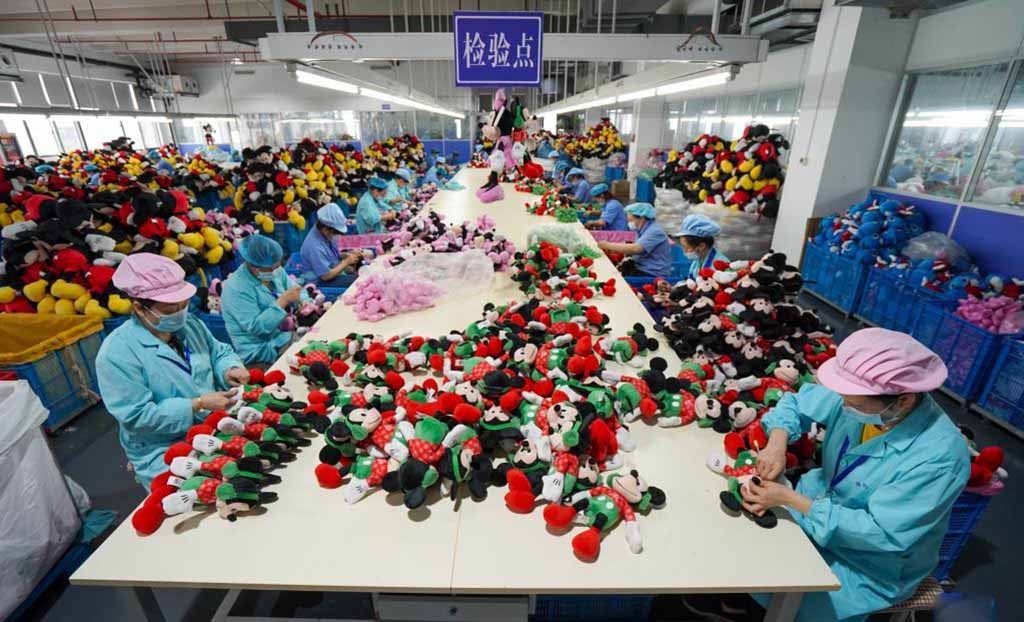
Premium plush requires higher QC standards than typical plush production. Every unit must match the Golden Sample with minimal deviation. QC begins from the moment materials arrive at the factory and continues through every production stage.
Factories inspect fabric dye lots, trimming accuracy, and fiber behavior before production starts. In-line QC monitors seam strength, stuffing density, pattern alignment, and symmetry during sewing. After stuffing, QC teams perform shape checks to ensure the plush stands or sits correctly and that facial expressions match the approved prototype.
High-end plush toys undergo stricter AQL (Acceptable Quality Level) standards, and many factories create custom QC checklists for each design. Collectible plush lines often require 100% unit inspection, not sampling.
| QC Stage | Purpose | Example Checks |
|---|---|---|
| Raw material QC | Ensure consistency | Dye lot match, pile density |
| In-line QC | Prevent errors early | Stitch strength, symmetry |
| Stuffing QC | Maintain shape | Density, firmness |
| Final QC | Brand-level accuracy | Expression, proportions, grooming |
This rigorous QC system ensures that premium plush toys look identical, feel high-quality, and maintain long-term durability.
How Finishing, Packaging, and Branding Complete the High-End Manufacturing Workflow
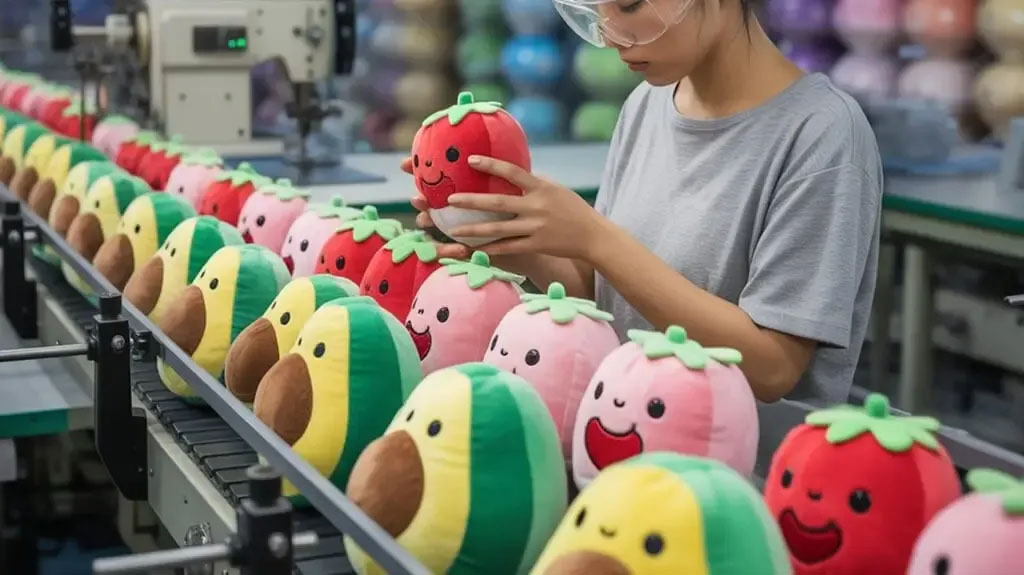
Finishing and packaging play a major role in premium plush perception. Even a beautifully engineered product feels incomplete without the right final presentation. High-end finishing includes:
- Surface grooming to remove fiber clumps and refine shape
- Precise trimming for fur edges and surface smoothness
- Hand-shaping of facial contours and body proportions
- Thread trimming for clean lines and no loose ends
- Lint removal to ensure a clean, polished appearance
Premium packaging elevates the customer experience further. Many luxury plush toys come in:
- Magnetic gift boxes
- Window display boxes
- Custom printed collector packaging
- Themed boxes featuring character artwork
- Numbered certificates of authenticity
Premium packaging not only improves retail presence but also protects the product during transport and enhances perceived value.
| Finishing Element | Luxury Impact |
|---|---|
| Grooming & trimming | Professional final appearance |
| Premium labels | Strengthens brand image |
| Collector packaging | Enhances display value |
| Story cards & certificates | Boosts emotional engagement |
| Protective packing | Prevents deformation |
Finishing and packaging complete the emotional and visual experience of luxury plush toys.
Conclusion
High-end plush toy manufacturing is a detailed, multi-stage process that blends engineering precision, premium materials, expert craftsmanship, and rigorous QC systems. When executed well, these elements transform a plush toy into a luxury product that feels expressive, durable, and beautifully made. For brands focused on premium markets, understanding this workflow helps them choose the right partners and achieve consistent, high-value results.
At Kinwin, we combine advanced engineering, skilled craftsmanship, and high-standard QC systems to create premium plush toys for global brands.
📧 Contact: [email protected]
🌐 Visit: https://kinwintoys.com